
- Buy Crypto
- Markets
- Futures
- Spot
- Copy Trade
 Earn
Earn- More
From Wuhan to Silicon Valley, Manus did it in just nine months.

Source: TechFlow (Shenchao)
Today’s biggest news in the AI world: Meta acquires Manus for several billion dollars.
This is Meta’s third-largest acquisition in its history, behind only WhatsApp and Scale AI—and more expensive than its acquisition of Instagram.
Looking at Manus’s timeline, the speed is striking. The product launched in March this year and was acquired in December. From release to exit: just nine months.
The founder, Xiao Hong, is from Ji’an, Jiangxi, and a graduate of Huazhong University of Science and Technology. His entrepreneurial journey began in Wuhan.
His first product was Yiban, a WeChat content formatting tool—sold.
The second was Weiban, a WeCom CRM product—also sold.
The third was Monica, a browser-based AI plugin—not sold, but heavily criticized.
Criticized for what?
For being a “wrapper.”
At the time, the prevailing industry belief was that only companies building large models had real prospects. Applications built on top of others’ models were dismissed as “shells” with no technical depth.
When Manus first went viral in March, co-founder Ji Yichao responded to questions on social media, saying:
“We’ve used Claude, and we’ve also used different fine-tuned versions of Qwen.”
In other words, they used other companies’ foundation models and focused on the application layer.
So what?
That approach is now worth billions of dollars.
Last year, senior executives from ByteDance flew to Hong Kong to meet Xiao Hong, offering USD 30 million to acquire Manus. He declined.
In hindsight, the gap between USD 30 million and several billion is not one year of time. It is this:
A product was truly built.
What makes this story most interesting is not the ending, but the process.
In July this year, Manus made a decisive move: relocating the company from China to Singapore. Out of a 120-person team, only 40 core technical staff moved together; the rest were laid off. The Beijing office was shut down, and the Wuhan office was closed as well.
At the time, many criticized the company for “leaving.”
Looking back, the move was necessary. Under current conditions, it would be nearly impossible for a Chinese company to be acquired by a U.S. tech giant and pass regulatory approval. Changing the place of incorporation removed that barrier.
The negotiation took just 10 days.
Liu Yuan, a partner at ZhenFund, said it was so fast that they initially suspected the offer might be fake.
Closing a multi-billion-dollar deal in 10 days—how urgent was Meta?
The context is revealing. This year, Meta’s capital expenditure on AI exceeded USD 70 billion, but most of it went into infrastructure. In terms of usable, consumer-facing products, there were few standouts.
OpenAI has ChatGPT.
Google has Gemini.
What does Meta have?
Llama is open source—anyone can use it. Meta needed a strong application-layer product, and Manus was ready-made.
Annualized revenue of USD 125 million, built from zero in eight months, global users, subscription-based, fully validated.
This was not an acquisition of a team. It was an acquisition of a proven business model.
Another interesting detail: Manus’s investor list includes Sequoia China, Tencent, and ZhenFund. When they invested, the valuation was in the tens of millions. At exit, returns were dozens of times that.
So the chain looks like this:
Chinese VCs invest in a Chinese company → the company relocates to Singapore → it is acquired by a U.S. company → Chinese VCs earn money from an American acquirer.
That chain is more “agent-like” than Manus’s own product.
After the acquisition, Xiao Hong becomes a Vice President at Meta. A founder who started in Wuhan, building a WeChat formatting tool, is now heading to Silicon Valley to report directly to Mark Zuckerberg.
Liu Yuan of ZhenFund summed it up with one line:
“An era for China’s new generation of young entrepreneurs has arrived.”
That statement may only be half true.
The era has indeed arrived—but it arrived by moving the company elsewhere.
You may also like
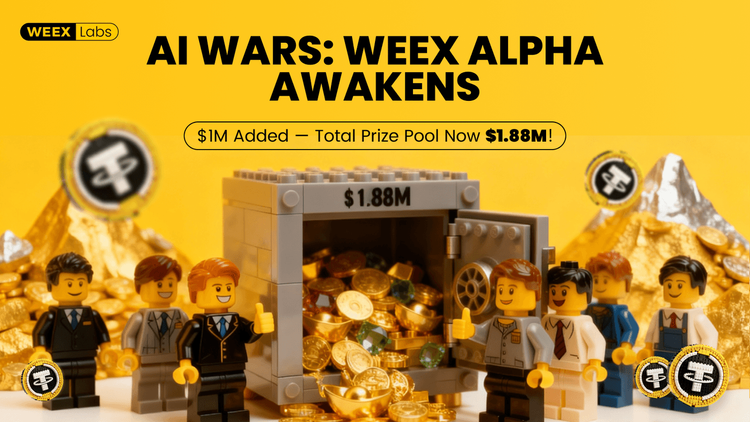
WEEX Global AI Trading Hackathon Kicks Off: $1.88M Prize Pool Powers the Next Generation of AI Trading Champions
WEEX Labs, the innovation arm of WEEX, a leading global crypto exchange serving over 6.2 million users across 150+ countries, is set to kick off the preliminary round of its flagship global AI trading hackathon, AI Wars: WEEX Alpha Awakens, on January 12, 2026. Backed by the strong support of world-class sponsors including Amazon Web Services (AWS), the total prize pool has surged from $880,000 to an unprecedented $1,880,000, positioning AI Wars among the largest AI trading hackathons in the crypto industry. At the top of the leaderboard awaits an extraordinary champion prize — a Bentley Bentayga S, already on standby in Dubai, ready to be claimed by the ultimate AI trading victor.

2025 Market Prediction Retrospective: Total Transaction Volume Exceeds $50 Billion, Duopoly Market Share Exceeds 97.5%

Pentagon Pizza Index Soars 1250%: Who Will Be the Next Venezuela?

From Theory to Live Markets: AOT Matrix’s Dual-Brain System in WEEX AI Trading Hackathon
In crypto markets — one of the most unforgiving non-stationary systems — strategy failure is rarely caused by models being too simple. It happens because most strategies are never truly exposed to live-market pressure. This is exactly the problem WEEX AI Trading Hackathon is designed to surface — shifting the focus from theoretical innovation to real deployability, real execution, and real performance. Among the participating teams, AOT Matrix stood out with advanced AI-driven quantitative capabilities. Through its V4.4 dual-brain architecture, the system achieved end-to-end optimization — from core logic to execution — reflecting the platform’s dual emphasis on innovation and real-world performance.

Predicting Contrarian Buy Pressure in the Market: Who is Taking the Other Side of Your Trade?

$250 Billion, 6723 Rounds of Funding: Where Did Crypto VCs Invest in 2025?

Coin Ownership or Equity Ownership? The Real Question Is Being Asked Wrong

Visa Crypto Lead: Eight Key Evolutions of Crypto and AI by 2026

Stores of Value: Gold and Silver Once Again Lead Global Asset Charts
Key Takeaways: Gold and silver have retaken their positions as the top assets by market capitalization, highlighting their…
Preliminary Round Participant Insights — AOT Matrix: Left-Brain Analysis, Right-Brain Decisions in AI Trading
In the WEEX AI Trading Hackathon, AOT Matrix chose a more cautious path in system design — one that’s actually harder to pull off in a live trading environment. From the very start, they made clear choices about what role AI should and shouldn’t play in the trading system. We interviewed AOT Matrix about their decision-making logic, the multiple iterations of their system architecture, and what it’s like to implement it under WEEX’s real trading environment and engineering constraints.

The US has had a president impeached twice, and Trump's platform says it's not an "insurrection."

A “sexy casino,” where real-estate speculation has moved online.
Using Polymarket to predict U.S. home prices feels eerily reminiscent of the 2008 subprime mortgage crisis.

Stop obsessing over Alpha, the Beta the market gives you is more important

Why AI Tokens Are Rising Faster Than the Broader Crypto Market
AI tokens are outperforming — and not quietly. Bitcoin is moving. Ethereum is holding ground. Yet some of the strongest relative gains are coming from AI-labeled tokens, not majors, not memes. At first glance, this feels intuitive. AI is real technology. It’s shaping industries far beyond crypto. But markets rarely move on intuition alone — especially not this fast. When prices accelerate ahead of adoption, the more useful question isn’t “Is AI important?” It’s which version of the AI story the market is buying — right now.
Doubling in a single day won't make up for a 98% crash - Did Parcl's 'Polymarket Story' Hold Up?

Dalio's Year-End Review: Currency, US Stocks, and Global Wealth Redistribution

After the Profit Taking Frenzy, Crypto Market Makers Dive into the "Deep End"

Key Market Intelligence on January 6th, how much did you miss out on?
WEEX Global AI Trading Hackathon Kicks Off: $1.88M Prize Pool Powers the Next Generation of AI Trading Champions
WEEX Labs, the innovation arm of WEEX, a leading global crypto exchange serving over 6.2 million users across 150+ countries, is set to kick off the preliminary round of its flagship global AI trading hackathon, AI Wars: WEEX Alpha Awakens, on January 12, 2026. Backed by the strong support of world-class sponsors including Amazon Web Services (AWS), the total prize pool has surged from $880,000 to an unprecedented $1,880,000, positioning AI Wars among the largest AI trading hackathons in the crypto industry. At the top of the leaderboard awaits an extraordinary champion prize — a Bentley Bentayga S, already on standby in Dubai, ready to be claimed by the ultimate AI trading victor.
2025 Market Prediction Retrospective: Total Transaction Volume Exceeds $50 Billion, Duopoly Market Share Exceeds 97.5%
Pentagon Pizza Index Soars 1250%: Who Will Be the Next Venezuela?
From Theory to Live Markets: AOT Matrix’s Dual-Brain System in WEEX AI Trading Hackathon
In crypto markets — one of the most unforgiving non-stationary systems — strategy failure is rarely caused by models being too simple. It happens because most strategies are never truly exposed to live-market pressure. This is exactly the problem WEEX AI Trading Hackathon is designed to surface — shifting the focus from theoretical innovation to real deployability, real execution, and real performance. Among the participating teams, AOT Matrix stood out with advanced AI-driven quantitative capabilities. Through its V4.4 dual-brain architecture, the system achieved end-to-end optimization — from core logic to execution — reflecting the platform’s dual emphasis on innovation and real-world performance.


 App
App