
- Buy Crypto
- Markets
- Futures
- Spot
- Copy Trade
 Earn
Earn- More
Kalshi Reaches $11 Billion Valuation After Massive Funding Boost

Key Takeaways:
- Kalshi secures an additional $1 billion in funding, elevating its valuation to $11 billion.
- Major investors in the recent funding round include Sequoia Capital and CapitalG.
- Competitor Polymarket targets a valuation between $12 billion and $15 billion with its upcoming funding efforts.
- Prediction markets like Kalshi and Polymarket have facilitated $17.4 billion in trading volume since September.
- Kalshi’s strategic integrations with companies like Google Finance and Robinhood enhance its market presence.
Kalshi’s Meteoric Rise in the Prediction Market Sphere
Kalshi, a fast-growing player in the prediction markets sector, has recently achieved a staggering valuation of $11 billion. This leap follows its latest fundraising endeavor, where it garnered a significant $1 billion from prominent investors such as Sequoia Capital and CapitalG. The momentum showcases the rapid growth and increased investor confidence in platforms that offer insights and betting opportunities on real-world events ranging from politics to corporate earnings.
This latest funding round, which saw the absence of previous investors like Andreessen Horowitz, Paradigm, and Anthos Capital, is a testament to Kalshi’s robust market strategy and expansion efforts. The company previously raised $300 million in October and has now expanded its reach to 140 countries. Kalshi’s trajectory places it neck and neck with Polymarket, its primary rival, which is aiming for a valuation increase in its upcoming funding ventures.
The Competitive Edge: Kalshi vs. Polymarket
Kalshi’s remarkable growth is highlighted by its ability to secure a major portion of the trading volume in the prediction market industry. According to DefiLlama data, since September, Kalshi has accounted for 61.4% of the $17.4 billion trading volume in this space. These figures underscore its dominance and the increasing fascination with prediction markets among investors and users alike.
Polymarket, on the other hand, has been actively working on overcoming regulatory hurdles that have limited its operations, particularly in the United States. Having been restricted from serving U.S. residents since 2022, it recently made a cautious return in a “Beta Mode” as it seeks to reestablish full services later this month.
Strategic Integrations Fueling Growth
Both Kalshi and Polymarket have been expanding their reach through strategic partnerships and integrations. For Kalshi, collaborations with high-profile platforms like Google Finance, Robinhood, and the newly emerging Pyth Network position it well to capture a broader audience and enhance user experience. These integrations allow users seamless access to prediction markets through commonly used financial and technological services.
Such strategic moves not only expand user bases but also enhance credibility and trust in these platforms. For instance, by integrating with Robinhood, a well-known trading platform, Kalshi can tap into an existing user base that is familiar with financial trades, potentially increasing its market penetration.
The Alluring Prospect of Prediction Markets
Prediction markets cater to a distinct niche where users buy and sell shares based on outcomes of various global events. This model provides a unique opportunity to capitalize on market predictions concerning political elections, sports events, and even significant cultural happenings. By offering a platform that blends financial speculation with real-world events, companies like Kalshi are innovating the way people engage with everyday occurrences, effectively monetizing curiosity and forecasting.
These platforms, through innovative integrations and expansion, are solidifying their place in the financial technology sector. They bridge the gap between traditional financial markets and emerging digital innovations, creating a new frontier for market speculation and investment.
Frequently Asked Questions
What is Kalshi and how does it operate within the prediction market sector?
Kalshi is a platform that allows users to speculate on the outcomes of real-world events through buying and selling shares in predicted outcomes. This enables users to participate in an exciting financial market driven by global events, ranging from political forecasts to sports results.
How does Kalshi’s valuation compare to its competitors?
Kalshi has recently achieved a valuation trajectory aligning it with Polymarket, its notable competitor. Kalshi’s current valuation stands at $11 billion, with Polymarket seeking a valuation between $12 billion and $15 billion through its next funding round.
Why are strategic integrations important for Kalshi?
Strategic integrations with platforms like Google Finance and Robinhood facilitate greater access to Kalshi’s services, reaching a wider audience and enhancing user experience. These partnerships also bolster its market reputation and user trust.
What challenges has Polymarket faced in recent years?
Polymarket faced regulatory challenges that limited its operations within the United States, restricting service to U.S. residents since 2022. However, it is gradually re-entering the market with a “Beta Mode” and intends to make a full return shortly.
How do prediction markets like Kalshi generate revenue?
Prediction markets generate revenue through transaction fees within the platform. Users buy and sell shares based on predicted outcomes of real-world events, with the platform profiting from the trading activities.
You may also like
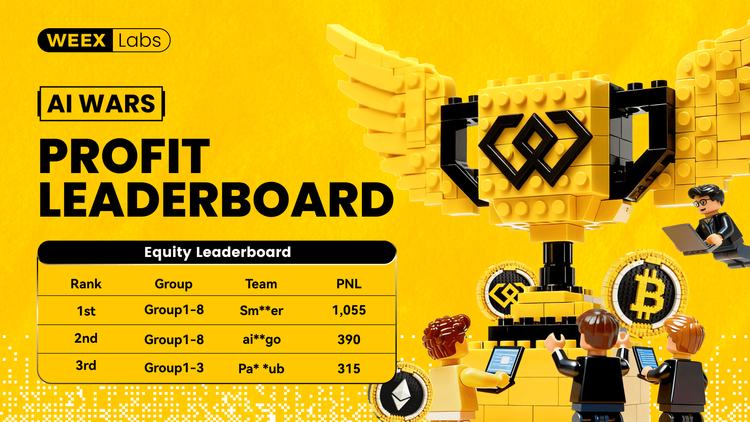
AI Wars: WEEX Alpha Awakens – Insights, Top Strategies, and Real-Market Execution Takeaways
WEEX Labs has officially launched the preliminary round of its global AI trading hackathon, AI Wars: WEEX Alpha Awakens, bringing together hundreds of elite teams to compete in real-market conditions. With a record-breaking $1.88 million prize pool and backing from top-tier sponsors like AWS, the event has quickly become a global proving ground for AI-powered trading strategies. As competition intensifies and standout teams emerge on the leaderboard, the hackathon not only showcases cutting-edge AI execution and risk management, but also offers valuable insights and inspiration for traders looking to build or refine their own AI-driven systems.

Layoffs of 30%, But Spending $250 Million to Buy a Company - What Is Polygon Thinking?

$200K Annual Salary Hiring, Predicting Market Will See Wall Street Players

Why Is Crypto Up Today? – January 14, 2026
Key Takeaways Cryptocurrency market capitalization has risen by 3.6% to $3.33 trillion, with 95 of the top 100…

An Insight into the Dynamics of Crypto Market Trends
Key Takeaways The article provides a comprehensive look at the latest developments in the cryptocurrency market. Insight is…

Robinhood CEO Urges U.S. as Staking Feature Awaits Approval
Key Takeaways Robinhood CEO Vlad Tenev is advocating for U.S. leadership in crypto regulation to unlock innovation and…

Whale’s 3x LIT Position Sees $2.84 Million in Unrealized Losses
Key Takeaways A whale holding a 3x leveraged long position on LIT faces over $2.84 million in unrealized…
Amber and Ethena Transfer 3,956 ETH to Major Exchanges
Key Takeaways Amber Group and Ethena deposited a total of 3,956 ETH, equivalent to approximately $13.24 million, to…

Crypto Whale Sells 300 WBTC, Incurred $39 Million Loss
Key Takeaways A crypto whale originally purchased $263 million in digital assets at peak prices in August 2025,…

BitGo’s Revenue Surges with Upcoming IPO as Institutional Interest Grows
Key Takeaways BitGo, a major player in cryptocurrency custody, aims to raise $201 million through a U.S. IPO…

A Trader Closes a 20-Day Short in PAX Gold, Faces $46,000 Loss
Key Takeaways: A trader concluded a 20-day short position in PAX Gold, incurring a $46,000 loss. Current market…
Venezuela’s Oil Revenue Tied to Stablecoins: The Rise of USDT in Economic Turmoil
Key Takeaways Significant Shift in Venezuela’s Economy: Approximately 80% of Venezuela’s oil revenue is settled in stablecoins like…
Dogecoin Price Analysis: Why $0.14 May Be a Barrier Difficult to Overcome
Key Takeaways Dogecoin has faced a significant challenge as a strong resistance has emerged at the $0.14 level,…

Wintermute's 28-Page Report Unveils the Inner Workings of Off-Chain Liquidity

Primitive Ventures Founder Dovey Wan: Who Is Footing the Bill for This Crypto Bull Market Cycle?

Team Expansion, The Hyperliquid Story Continues

$H Project Team Withdraws Massive H Tokens from Exchanges
Key Takeaways $H project team removed H tokens worth $23.5 million from exchanges in 24 hours. The primary…

Life Candlestick Drama Escalates: Fund Established, 'Cyber Altruism Box' Feature Launched; Founder Denies Meme Coin Issuance
AI Wars: WEEX Alpha Awakens – Insights, Top Strategies, and Real-Market Execution Takeaways
WEEX Labs has officially launched the preliminary round of its global AI trading hackathon, AI Wars: WEEX Alpha Awakens, bringing together hundreds of elite teams to compete in real-market conditions. With a record-breaking $1.88 million prize pool and backing from top-tier sponsors like AWS, the event has quickly become a global proving ground for AI-powered trading strategies. As competition intensifies and standout teams emerge on the leaderboard, the hackathon not only showcases cutting-edge AI execution and risk management, but also offers valuable insights and inspiration for traders looking to build or refine their own AI-driven systems.
Layoffs of 30%, But Spending $250 Million to Buy a Company - What Is Polygon Thinking?
$200K Annual Salary Hiring, Predicting Market Will See Wall Street Players
Why Is Crypto Up Today? – January 14, 2026
Key Takeaways Cryptocurrency market capitalization has risen by 3.6% to $3.33 trillion, with 95 of the top 100…
An Insight into the Dynamics of Crypto Market Trends
Key Takeaways The article provides a comprehensive look at the latest developments in the cryptocurrency market. Insight is…
Robinhood CEO Urges U.S. as Staking Feature Awaits Approval
Key Takeaways Robinhood CEO Vlad Tenev is advocating for U.S. leadership in crypto regulation to unlock innovation and…


 App
App