
- Buy Crypto
- Markets
- Futures
- Spot
- Copy Trade
 Earn
Earn- More
The UK’s Careful Stance on Stablecoins: A Balancing Act

Key Takeaways
- The Bank of England (BOE) has outlined new proposed regulations for stablecoins, sparking debate within the cryptocurrency community.
- These regulations aim to protect financial stability while exploring the potential of stablecoins, though some see them as overly restrictive.
- Notably, systemic retail stablecoins face specific limits on usage, raising concerns about individual and corporate freedom to transact.
- The regulatory pace has been slow, with progress dating back to 2017, yet the framework remains unfinished, causing frustration for businesses.
- Experts suggest that clarity, speed, and innovation-friendly approaches are essential for the UK to remain competitive in the digital asset space.
Navigating the Path of Stablecoin Regulation in the UK
The Bank of England (BOE) has recently released a much-anticipated regulatory proposal that has drawn significant attention from the cryptocurrency community. This regulatory framework for stablecoins comes at a crucial time when the digital asset world is rapidly evolving. However, many believe that while the BOE’s cautious approach is understandable, the suggested measures might hinder rather than help.
Understanding the Cautious Approach
In November 2023, the BOE put forth a consultation paper that incorporated feedback from a diverse group of 46 stakeholders, including banks, payment service providers, trade associations, and individuals. This attempt to engage with various perspectives appears well-intentioned but still draws criticism. Industry voices argue that despite some relaxed rules compared to earlier propositions, these regulations continue to be overly restrictive and could potentially stifle innovation.
Tom Rhodes, the Chief Legal Officer at Agant, a UK-based stablecoin issuer, articulated this sentiment, describing the BOE’s stance as “disproportionately cautious and restrictive.” He noted that while there are commendable features like direct BOE liquidity lines, there’s still room for expanding these proposals without undermining stability.
The Controversial Cap on Stablecoin Holdings
One of the more debated aspects of these guidelines is the cap on systemic retail stablecoins. Under the BOE’s vision, stablecoins utilized for daily transactions like shopping or salary payments cannot exceed a limit of 20,000 pounds for individuals and 10 million pounds for businesses. This proposal, though an improvement from its earlier version, still faces backlash.
Aleksandra Huk, a notable crypto influencer, voiced her disapproval, questioning the authority of the BOE in controlling personal finances to such an extent. Her concerns reflect a broader apprehension around perceived limitations on financial freedom.
Scrutinizing the Implementation Challenges
While Geoff Richards from the Ontology Network pointed out that these restrictions apply specifically to sterling-denominated stablecoins in the UK’s payment systems, this has not placated all critics. Ian Taylor from CryptoUK underscored the complexity of enforcing these limits. He illuminated the challenges regulators might face, given the diverse sources of stablecoin acquisition, like secondary markets and peer-to-peer transactions.
Rhodes also highlighted operational enforcement as a significant hurdle. Without clear guidelines from His Majesty’s Treasury on what constitutes a substantial economic risk, the proposal’s practical implementation might falter.
The Long Journey Towards Comprehensive Crypto Regulations
The UK’s journey towards stablecoin regulation has been slow and filled with hurdles. Since 2017, the government has been working to integrate crypto-related businesses into its anti-money laundering and know-your-customer framework. Fast forward eight years, the full regulatory landscape remains undefined.
This lag has business implications. Taylor lamented the absence of a clear licensing framework, emphasizing that companies lack a straightforward path to launching stablecoins in the UK. Consequently, this regulatory void nudges businesses to explore opportunities offshore, where regulatory clarity is more established.
Embracing Innovation with Caution
Despite the challenges, some industry leaders acknowledge the pragmatism in the BOE’s approach. For instance, Arvin Abraham from Goodwin Procter emphasized the importance of balancing innovation with stringent control measures akin to traditional money. He pointed out the necessity of providing issuers with predictable timelines for navigating approvals.
However, the clock is ticking for the UK to position itself as a leader in the digital currency space. Industry experts advocate for greater clarity and faster action to ensure the UK’s competitive edge is not dulled, recognizing that the environment is primed for integrating real money controls with innovative digital solutions.
FAQ
What are stablecoins, and why are they significant in the financial sector?
Stablecoins are digital currencies designed to maintain a stable value by pegging them to fiat currencies like the US dollar or commodities like gold. They offer the benefits of cryptocurrencies, like speedy transactions, without the volatility typically associated with digital assets. Their integration in everyday transactions highlights their growing role in modern finance.
Why is the Bank of England cautious about stablecoins?
The BOE aims to safeguard the financial system’s stability by ensuring that stablecoins do not disrupt existing financial mechanisms. They are concerned about stablecoins withdrawing deposits from traditional banks, potentially reducing loan issuance and affecting overall financial stability.
How do the proposed regulations affect stablecoin issuers in the UK?
The regulations propose increased oversight and restrictions, particularly concerning systemic stablecoins widely used for everyday payments. While offering some benefits like access to central bank liquidity, these rules also place caps on how much one can hold, which could impact issuers’ market operations.
How have industry professionals reacted to the BOE’s proposals?
Industry professionals express mixed reactions. While some appreciate the BOE’s steps towards regulation, others criticize the perceived restrictive nature, advocating for clearer and innovation-friendly guidelines that allow businesses to thrive without excessive limitations.
What steps can the UK take to improve its position in the crypto space?
Experts emphasize the need for the UK to speed up its regulatory process and offer clearer, more streamlined pathways for businesses. By crafting a regulatory environment that encourages innovation while maintaining stability, the UK can bolster its standing in the global digital asset arena.
You may also like

Delphi Digital's Top 10 Predictions for 2026: Perp DEX Eats Wall Street, AI Agents Usher in Era of Autonomous Trading

X Pulls the Plug — the Era of “Talking Your Way to Traffic” Comes to an End.
Other people’s traffic will always belong to them—not to you.

First Zero, First Revival: A Real Story from the WEEX Global AI Trading Hackathon Preliminary Round
WEEX Labs, the innovation arm of the global crypto exchange WEEX, launched the preliminary round of its flagship AI trading hackathon, AI Wars: WEEX Alpha Awakens, on January 12, 2026. Backed by world-class sponsors including AWS, the prize pool has reached $1.88 million, with a Bentley Bentayga S awaiting the champion in Dubai. Already, 788 elite teams worldwide are battling for a spot in the finals. This is more than a hackathon — it is a real-market stress test for AI trading. Registration remains open until January 18. If you want your AI to face real volatility, this is your moment.
AI Wars: WEEX Alpha Awakens – Insights, Top Strategies, and Real-Market Execution Takeaways
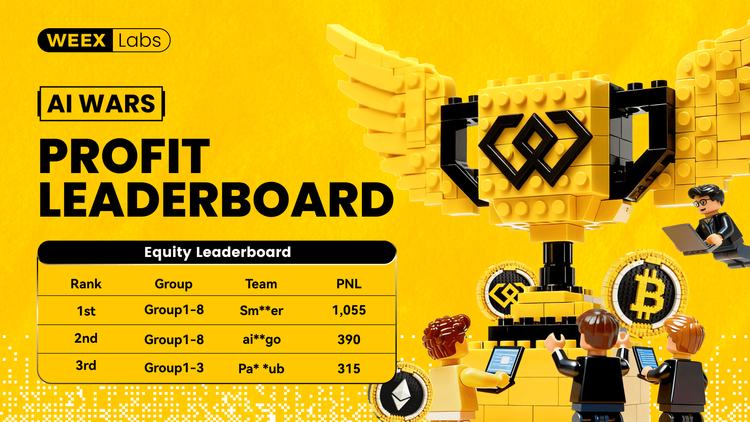
WEEX Labs has officially launched the preliminary round of its global AI trading hackathon, AI Wars: WEEX Alpha Awakens, bringing together hundreds of elite teams to compete in real-market conditions. With a record-breaking $1.88 million prize pool and backing from top-tier sponsors like AWS, the event has quickly become a global proving ground for AI-powered trading strategies. As competition intensifies and standout teams emerge on the leaderboard, the hackathon not only showcases cutting-edge AI execution and risk management, but also offers valuable insights and inspiration for traders looking to build or refine their own AI-driven systems.

WEEX P2P now supports Polish zloty (PLN)—new users and merchant rewards
To make crypto deposits easier, WEEX has officially launched its P2P trading platform and continues to expand fiat support. We're excited to announce that the Polish Zloty (PLN) is now available on WEEX P2P!

Layoffs of 30%, But Spending $250 Million to Buy a Company - What Is Polygon Thinking?

Sentient Reveals Tokenomics, How Will the Market Price It?

AI in the Crypto Market: How Artificial Intelligence is Changing Trading Strategies
This article explores how AI contributes to these movements and share practical strategies to help you navigate an AI-powered crypto market.
Yen Weakness Nears Inflation Red Line: Bank of Japan May Be Forced to Hike Early

Cross-chain Collaboration: Tom Lee Invests $200 Million, Joins Forces with Global Top Streamer Mr. Beast

Interactive Brokers Integrates USDC, US Bank Questions Stablecoin, What's the Overseas Buzz?

Trump Waves Hand, Stirs Venezuela's Game Hurricane
The Genius Stopping Law: Why Did Coinbase Backpedal at the Eleventh Hour?

Fact Check: How Much Money Did the University of Chicago Lose in its Crypto Investment?

Rumor has it that Coinbase is set to acquire Farcaster, still an Acquihire.

VanEck Q1 Market Outlook: Long-Term Bullish on Cryptocurrency, Strong Gold Demand
In the span of a week, what does Twitter's continuous updating on the Coin Circle Plate reform and Musk's intentions mean?

By seizing the first five seconds of Gold Dog, "Dry Sitting P Junior" earns $430,000 in 30 days.
Delphi Digital's Top 10 Predictions for 2026: Perp DEX Eats Wall Street, AI Agents Usher in Era of Autonomous Trading
X Pulls the Plug — the Era of “Talking Your Way to Traffic” Comes to an End.
Other people’s traffic will always belong to them—not to you.
First Zero, First Revival: A Real Story from the WEEX Global AI Trading Hackathon Preliminary Round
WEEX Labs, the innovation arm of the global crypto exchange WEEX, launched the preliminary round of its flagship AI trading hackathon, AI Wars: WEEX Alpha Awakens, on January 12, 2026. Backed by world-class sponsors including AWS, the prize pool has reached $1.88 million, with a Bentley Bentayga S awaiting the champion in Dubai. Already, 788 elite teams worldwide are battling for a spot in the finals. This is more than a hackathon — it is a real-market stress test for AI trading. Registration remains open until January 18. If you want your AI to face real volatility, this is your moment.
AI Wars: WEEX Alpha Awakens – Insights, Top Strategies, and Real-Market Execution Takeaways
WEEX Labs has officially launched the preliminary round of its global AI trading hackathon, AI Wars: WEEX Alpha Awakens, bringing together hundreds of elite teams to compete in real-market conditions. With a record-breaking $1.88 million prize pool and backing from top-tier sponsors like AWS, the event has quickly become a global proving ground for AI-powered trading strategies. As competition intensifies and standout teams emerge on the leaderboard, the hackathon not only showcases cutting-edge AI execution and risk management, but also offers valuable insights and inspiration for traders looking to build or refine their own AI-driven systems.
WEEX P2P now supports Polish zloty (PLN)—new users and merchant rewards
To make crypto deposits easier, WEEX has officially launched its P2P trading platform and continues to expand fiat support. We're excited to announce that the Polish Zloty (PLN) is now available on WEEX P2P!


 App
App