
What Is Boundless (ZKC) and How Does It Work?

 Prefer us on Google


What Is Boundless (ZKC)?
Boundless is an innovative protocol that leverages zero-knowledge proofs (ZKPs) to dramatically improve blockchain scalability. Traditional programmable blockchains require every full node to re-execute all transactions in a block to verify state changes. While secure, this process is highly redundant and limits network throughput.
Boundless introduces a decentralized marketplace for verifiable computation. Developers submit computational tasks, and a network of provers competes to generate ZK proofs for these operations. Rather than every node repeating the same work, a single prover executes the task and produces a compact proof that all other nodes can quickly verify. This approach eliminates computational redundancy and enables developers to create more sophisticated applications without being constrained by high gas fees or block size limitations.
How Does Boundless Work?
Proof of Verifiable Work (PoVW)
Boundless utilizes a novel consensus mechanism called Proof of Verifiable Work (PoVW). Unlike traditional Proof of Work that focuses on solving arbitrary puzzles, PoVW directs computational resources toward generating useful ZK proofs for real-world applications.
Provers participate by staking ZKC tokens and earn rewards for successfully completing proof generation tasks. Failure to deliver results results in partial stake slashing, creating strong incentives for reliable performance while ensuring network resources are allocated to valuable computational work.
Boundless Proving Stack
Built on the RISC Zero zero-knowledge virtual machine (zkVM), Boundless enables developers to prove correct execution of Rust-based programs without requiring network-wide recomputation. The system operates through two core components: Bento (local proving infrastructure) and the Broker (market coordination service).
Bento handles request management, program execution, and proof assembly, capable of scaling from single GPU setups to large computing clusters. The Broker facilitates market interactions by evaluating proof requests, managing auctions, and securing commitments through collateral mechanisms.
The proof generation process follows these steps:
- Program Development: Developers create Rust programs for the zkVM, where execution produces both output and a cryptographic seal verifying correctness
- Request Submission: Developers submit proof requests to the Boundless Market with deposited funds to cover computation costs
- Prover Competition: Provers participate in reverse Dutch auctions, with selected provers locking collateral to secure requests
- Proof Generation: The winning prover generates the proof, potentially aggregating multiple requests into a single verification
- On-Chain Verification: Proofs are submitted for on-chain verification, triggering reward distribution upon successful validation
- Implementation: Developers integrate verified proofs into their applications as trustless execution certificates
Key Features of Boundless (ZKC)
Vision & Core Innovation
Boundless reimagines blockchain scalability by fundamentally separating transaction execution from network consensus. Unlike conventional networks that require every node to redundantly process each transaction—creating significant bottlenecks—Boundless introduces a decentralized prover marketplace. Here, specialized nodes perform off-chain computations and generate zero-knowledge proofs, providing cryptographic assurance of correct execution. This model allows blockchains to verify proofs rather than re-run entire workloads, drastically improving throughput, reducing latency, and paving the way for frictionless cross-chain interoperability.
Technical Architecture & Design
Developed by RISC Zero, the pioneers behind the first general-purpose zkVM, Boundless is powered by a novel consensus mechanism called Proof of Verifiable Work (PoVW). In this system, provers compete to produce ZK proofs for a variety of clients—including Layer 1 blockchains, rollups, and decentralized applications—with verification occurring on-chain. The architecture is designed to be universally compatible, serving as a plug-and-play ZK co-processing layer that requires no changes to existing chain protocols. Security is maintained through cryptographic proof verification and an economic safeguard mechanism where provers stake ZKC tokens as collateral, ensuring reliability and accountability.
Token Utility & Economic Model
The ZKC token is an ERC-20 asset with an initial supply capped at 1 billion. The emission schedule begins at 7% per year, gradually tapering to 3% by the eighth year, balancing incentivization and sustainability.
- 75% of emissions reward provers for generating valid proofs, aligning compensation with useful computational work.
- 25% is allocated to stakers who help secure the network and participate in governance.
This structured inflationary model is designed to bootstrap ecosystem participation and secure the network, though it introduces token supply dynamics that participants should consider in their long-term strategy.
-- Price
Conclusion
Boundless represents a paradigm shift in blockchain scalability, replacing redundant computation with efficient zero-knowledge verification. By creating a decentralized marketplace for verifiable computation, the protocol enables more complex applications while maintaining security and reducing costs. Its developer-friendly approach abstracts away technical complexity, allowing builders to focus on creating innovative applications without scalability constraints.
For those interested in participating in the Boundless ecosystem, ZKC tokens are available for trading on WEEX Exchange. WEEX offers secure and efficient trading with deep liquidity, competitive fees, and a user-friendly interface suitable for both beginners and experienced traders.
Start trading ZKC on WEEX today to become part of the verifiable computation revolution.
Further Reading
- What Is Tether and How Does It Work?
- What Is World Liberty Financial (WLFI) and How Does It Work?
- What Is Dogecoin and How Does It Work?
Disclaimer: The opinions expressed in this article are for informational purposes only. This article does not constitute an endorsement of any of the products and services discussed or investment, financial, or trading advice. Qualified professionals should be consulted prior to making financial decisions.
This content is provided for general informational purposes only and doesn't constitute financial, investment, legal, or tax advice. Any events, rewards, online promotions, or related information mentioned herein should not be considered a recommendation, solicitation, or invitation to purchase, sell, trade, or otherwise deal in any crypto assets. Crypto assets are highly volatile and may result in loss. The availability of WEEX services, products, and related events may vary by region. You are responsible for ensuring that your participation is in accordance with applicable local laws and regulations.
You may also like
xStocks Crypto Explained: What Tokenized Stocks Are, How They Work and What Holders Should Check
BTC Funding Rate and Open Interest: What Each One Measures and How to Read Them Together

What Is Pearl (PRL) Crypto and How Does Its Mining Work?

What Happened to Aergo (AERGO) Crypto? Token Migration and What Holders Should Do

What Is HeyElsa (ELSA) Crypto and How Does It Work?

Stake ETH or Hold USDT on WEEX? The Price Move That Decides It
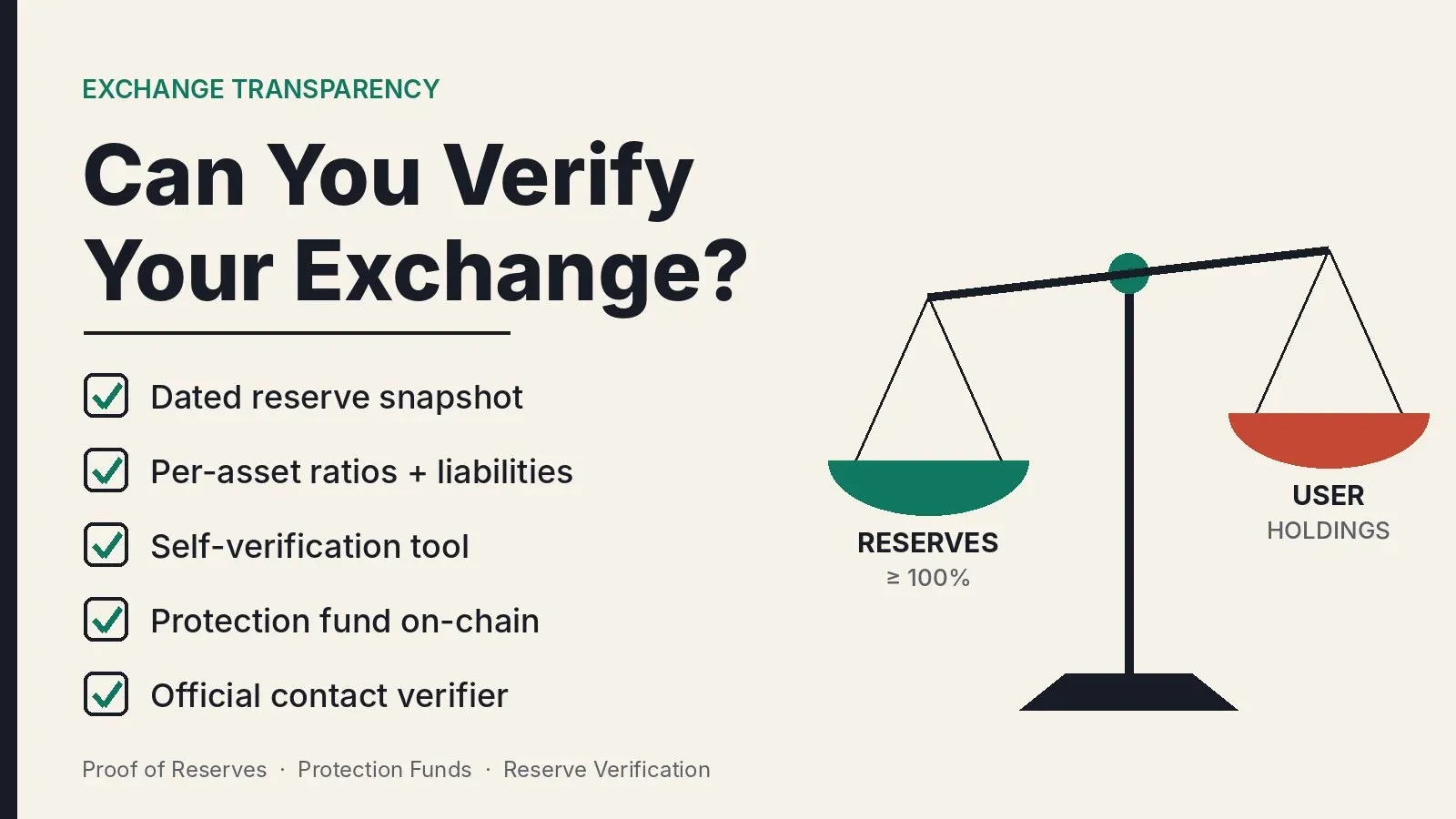
How Transparent Is a Crypto Exchange? Checking Proof of Reserves and Protection Funds

Token Unlocks This Week: How to Read AKE, ZRO and XPL Releases

World ID for Banks: What the New Suite Means for WLD Holders

Solana Alpenglow Upgrade: What Changes When Finality Hits 150ms
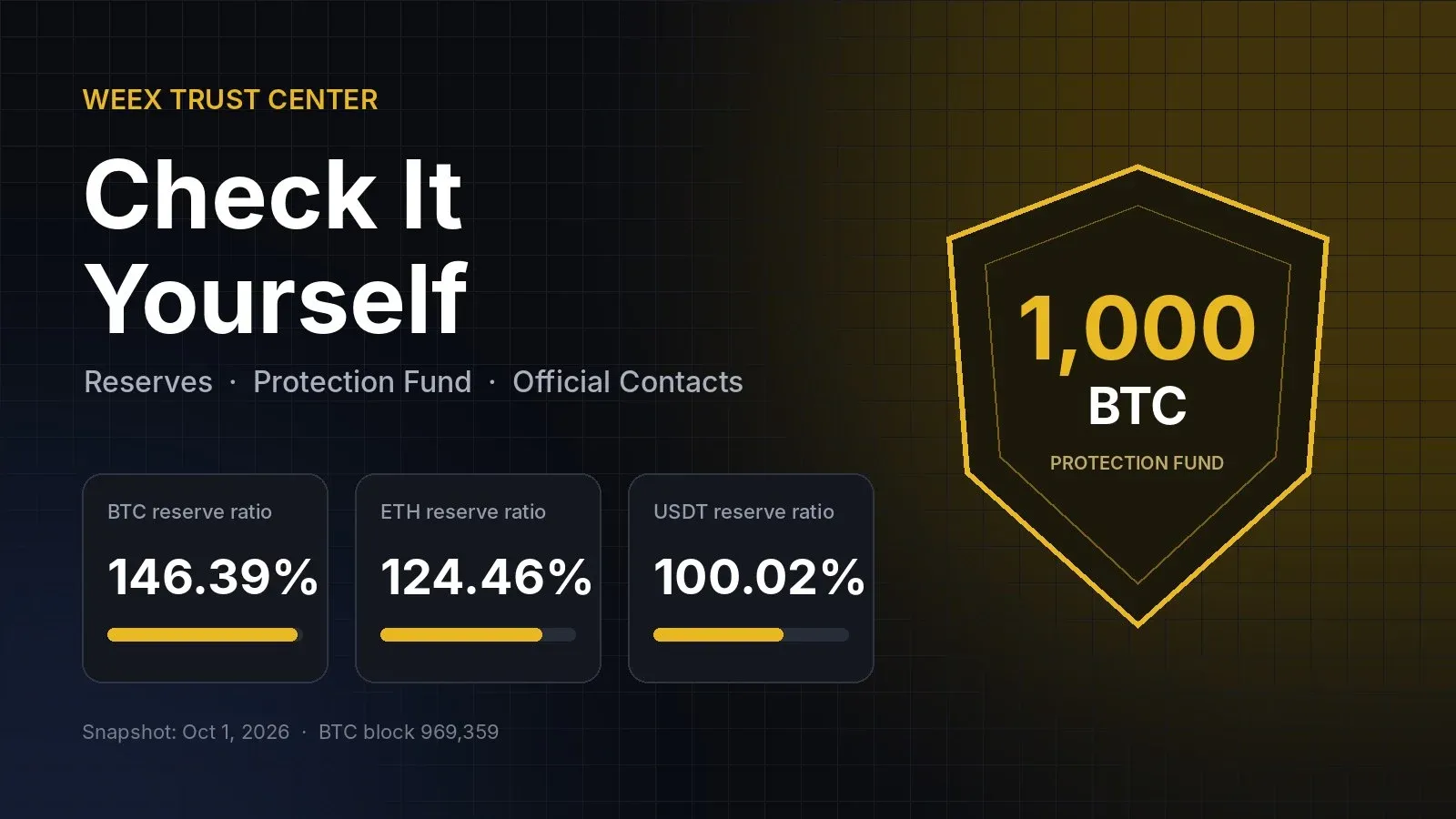
How to Use the WEEX Trust Center: Check Reserves, Protection Fund and Official Contacts

INJ Community BuyBack: What the $247K October Pool Really Means

What Is Leverage Trading in Crypto? A Beginner’s Guide With Simple Examples

What Is Crypto Margin Trading? How It Works, How It Differs From Futures and What Can Go Wrong
Crypto Leverage Trading Explained: How Perpetual Futures, Margin and Liquidation Work
Best Crypto Leverage Trading Platform: Things to Compare Before You Choose an Exchange
Nvidia Stock This Week: Why NVDA Fell Then Bounced and What AI Funding Worries Mean for Chip Stocks

Is My Pre-4.26.4 Qubic Wallet Unsafe? Recovery After the Network Restart

WXT Staking When Supply Shrinks: What Burns Add to Your Yield

Are Tokenized Stocks Backed by Real Shares? What Holders Own

ETH Funding Rate Today: 0.0087% per 8h as Ether Longs Re-Lever

Bitcoin Margin Trading: BTC Liquidation Math at 3x, 10x and 25x

Crypto Leverage Trading Platform: 6 Checks Before You Deposit

What Is Margin Trading? A $1,000 Example at 3x and 10x Leverage

The 17 October 2026 DBR Unlock: Six Allocations and deBridge's Vesting Schedule
Fake Crypto Payments: What to Check Before Handing Over Goods

What Is Leverage in Trading? How Leverage Ratios Like 5x and 10x Work and What They Do to Your Risk
What Is Leverage Trading? A Beginner’s Guide to Margin, Liquidation and Funding Fees
Is RSI a Good Indicator? How the Relative Strength Index Works, Its Limits and How Traders Use It
CXMT Stock Explained: What Is ChangXin Memory, Why It Fell on October 19 and What to Watch Next
xStocks Crypto Explained: What Tokenized Stocks Are, How They Work and What Holders Should Check
BTC Funding Rate and Open Interest: What Each One Measures and How to Read Them Together
What Is Pearl (PRL) Crypto and How Does Its Mining Work?
What Happened to Aergo (AERGO) Crypto? Token Migration and What Holders Should Do
What Is HeyElsa (ELSA) Crypto and How Does It Work?
Stake ETH or Hold USDT on WEEX? The Price Move That Decides It
Contents
Popular coins
Latest articles


