
Tether Backs SCRYPT: Could USDT Become the New Rail for Global Payments?

 Prefer us on Google
Key Takeaways
- Tether announced a strategic investment in Switzerland-based SCRYPT on November 19, 2026, without disclosing the amount or company valuation.
- SCRYPT provides institutional stablecoin liquidity, foreign exchange, custody and cross-border settlement services.
- The investment supports SCRYPT's planned expansion into third-party payments and fiat account services for institutional clients.
- Greater institutional adoption could increase stablecoin transaction activity, but it does not guarantee USDT market-cap growth or eliminate payment and custody risks.
The Tether SCRYPT investment marks another step toward expanding stablecoin use in traditional financial services. Announced on November 19, 2026, the Tether SCRYPT investment will support institutional payments, liquidity and cross-border settlement infrastructure. This article examines the Tether SCRYPT investment, how the proposed payment model works and what broader adoption could mean for USDT.
Why Did Tether Invest in SCRYPT?
Tether announced on November 19, 2026, that it had made a strategic investment in SCRYPT, a Swiss institutional digital-asset platform specializing in stablecoin trading and liquidity.
The investment is intended to help SCRYPT expand its existing services into third-party payments. The company's established operations include spot trading, over-the-counter transactions, foreign exchange, custody and institutional asset management.
The strategic rationale is that banks, brokers, financial technology companies and payment providers increasingly need ways to move funds across borders without relying exclusively on traditional correspondent banking arrangements.
Those arrangements can involve multiple intermediaries, settlement schedules and capital held in prefunded accounts. Stablecoin-based transfers may offer an alternative settlement mechanism, particularly when institutions need to move value outside conventional banking hours.
Tether–SCRYPT Investment: Key Facts
| Metric | Announced Information |
|---|---|
| Announcement Date | November 19, 2026 |
| Investor | Tether |
| Company Receiving Investment | SCRYPT |
| Location | Switzerland |
| Investment Type | Strategic investment |
| Investment Amount | Not disclosed |
| Company Valuation | Not disclosed |
| Existing Services | Spot, OTC, FX, custody, asset management |
| Planned Expansion | Third-party payments and fiat account services |
| Target Customers | Banks, brokers, fintechs and payment firms |
| Main Objective | Institutional stablecoin liquidity and settlement |
Source: Tether Official Investment Announcement, November 19, 2026.
Importantly, Tether did not announce an investment value, ownership percentage or guaranteed future payment volume. These details should not be inferred from the transaction's strategic significance.
The investment is therefore best understood as an infrastructure expansion initiative rather than evidence of a specific increase in USDT circulation.

How Could SCRYPT Make Cross-Border Payments Faster?
SCRYPT's business model aims to connect traditional currencies, stablecoins and institutional financial services through a shared operating platform.
In a conventional international payment, funds may pass through multiple financial institutions before reaching the recipient. This process can require correspondent bank relationships, sufficient balances in destination currencies and coordination across different operating hours.
A stablecoin-based payment route can use digital assets as the transfer mechanism between two fiat currency endpoints.
For example, a payment company might receive funds in one currency, convert the funds into a supported stablecoin, transfer the stablecoin across a blockchain network and convert it into the recipient's local currency through a regulated or otherwise authorized financial service provider.
Traditional Payments vs. Stablecoin Settlement
| Feature | Conventional Cross-Border Payment | Stablecoin-Based Payment Route |
|---|---|---|
| Main Infrastructure | Banks and payment networks | Blockchain and service providers |
| Operating Hours | May depend on banking schedules | Blockchain transfers can operate 24/7 |
| Currency Conversion | Banking or FX intermediaries | Fiat and stablecoin liquidity providers |
| Settlement Speed | Depends on payment route | On-chain transfer may settle within minutes |
| Liquidity Requirements | May require prefunded accounts | Depends on provider liquidity and payout model |
| Key Risks | Intermediary delays and operating restrictions | Conversion, custody, network and compliance risks |
Source: Comparison of the operating models described in Tether's November 19 announcement. Actual settlement times and costs depend on the payment provider, network and destination.
The distinction between on-chain settlement and complete payment delivery is particularly important.
Although transferring a stablecoin may take only minutes, the final payout to a recipient can still depend on local banking access, currency liquidity, regulatory checks and the availability of a reliable off-ramp.
For this reason, it would be misleading to describe all international payments as becoming instant simply because a blockchain is involved.
What Is SCRYPT's Role?
SCRYPT provides the institutional infrastructure connecting different stages of the transaction. This includes liquidity access, digital-asset trading, custody and foreign exchange.
According to Tether, SCRYPT already offers around-the-clock spot, OTC and FX trading alongside segregated custody secured using multi-party computation technology.
The planned expansion into third-party payments is intended to build on this established infrastructure. It does not mean that all proposed services were fully operational on the announcement date.
Why Does This Investment Matter for USDT?
USDT is a U.S. dollar-referenced stablecoin used across cryptocurrency trading, digital payments and other blockchain applications.
Unlike volatile cryptocurrencies, USDT is designed to maintain a value close to one U.S. dollar. Its use in payment infrastructure is therefore associated primarily with transferring dollar-denominated value rather than speculation on price appreciation.
If institutions increasingly use USDT or related stablecoin services to settle payments, network transaction activity and demand for stablecoin liquidity could expand.
However, it is important to distinguish between transaction volume, circulating supply and the financial performance of the stablecoin issuer.
A stablecoin can be transferred multiple times without requiring an equivalent increase in the number of outstanding tokens. Higher payment volume therefore does not automatically produce proportional growth in USDT supply.
Three Potential Implications for the Stablecoin Market
Greater institutional access: Financial institutions may find it easier to incorporate stablecoin settlement into their operations when service providers connect digital assets with familiar treasury, custody and reporting tools.
More payment-related demand: Stablecoins may increasingly be used for commercial settlement rather than exclusively for cryptocurrency exchange activity.
More infrastructure competition: As institutional stablecoin payments grow, providers may compete on liquidity, geographic coverage, regulatory arrangements and operational reliability.
These developments could strengthen the broader stablecoin ecosystem, but the specific commercial results of Tether's investment remain uncertain.
Can Stablecoins Replace Traditional Banking Rails?
Stablecoins may improve certain aspects of cross-border settlement, but replacing traditional banking infrastructure is a much broader challenge.
Businesses need more than an efficient method of transmitting tokens. They also require access to fiat currencies, legal certainty, reliable counterparties, financial reporting, transaction monitoring and customer support.
Regulatory requirements can differ substantially between jurisdictions. Payment providers may need to address licensing, anti-money-laundering obligations, customer verification and sanctions screening, depending on their services and operating locations.
What Could Slow Institutional Adoption?
One potential obstacle is fragmented regulation. A payment route that works efficiently in one market may face different restrictions in another.
A second challenge is liquidity. Large payments require sufficient market depth to convert between stablecoins and local currencies without unacceptable execution costs.
Third, institutions must evaluate custody and operational risks. Security controls, independent oversight and incident response remain important even when transaction settlement is technologically efficient.
Finally, stablecoins themselves introduce issuer and redemption risks. The intended dollar reference is not equivalent to an unconditional guarantee of bank-deposit protection.

Does the SCRYPT Investment Change USDT's Price?
The investment does not announce any modification to USDT's target price or redemption framework.
USDT is designed to track the U.S. dollar. Consequently, investment news involving Tether should not be interpreted in the same way as a growth announcement for a cryptocurrency whose price is expected to fluctuate freely.
The more relevant considerations for USDT users are reserve transparency, redemption conditions, market liquidity and the reliability of the systems used to hold and transfer the token.
If institutional adoption increases, it may contribute to greater USDT utility and transaction activity. Nevertheless, such growth should be supported by observed settlement volumes and actual customer usage rather than projected solely from the investment announcement.
How to Trade USDT and USDC on WEEX
WEEX supports stablecoin trading, including a USDC/USDT spot market. Users can access this market to exchange supported dollar-referenced digital assets, subject to account eligibility and trading availability.
This trading function is separate from SCRYPT's institutional payment services. Purchasing or exchanging stablecoins on WEEX does not provide an ownership interest in Tether or SCRYPT.
Step 1: Open the Stablecoin Trading Market
Visit the WEEX USDC/USDT Spot Trading Page and review the available order book, current quotation and trading conditions.
Step 2: Review the Stablecoins and Network Requirements
Before depositing or transferring stablecoins, verify the token symbol and supported blockchain network. USDT and USDC are separate assets issued by different entities, and their redemption arrangements and risk characteristics are not identical.
Step 3: Confirm the Transaction
Choose a supported order type and review the amount and execution price before trading.
If transferring stablecoins off-platform, confirm the recipient address, blockchain network and applicable withdrawal requirements. Network mismatches or incorrect addresses can result in permanent asset loss.
Conclusion
Tether's November 19 investment in SCRYPT highlights the growing importance of institutional infrastructure in the stablecoin industry.
Rather than focusing on a new speculative token, the investment targets the practical challenges of moving funds between traditional currencies and blockchain networks.
The potential benefits include expanded payment access, faster settlement and more efficient cross-border liquidity management. However, actual adoption will depend on the success of SCRYPT's planned services, institutional demand and the ability to manage regulatory and operational risks.
For USDT users, the development illustrates a broader shift toward payment utility, but it does not change the token's intended dollar reference or guarantee future growth.
FAQ
1. What is the Tether SCRYPT investment?
On November 19, 2026, Tether announced a strategic investment in SCRYPT, a Swiss provider of institutional stablecoin trading and liquidity services. The investment is intended to support the company's expansion into third-party payments.
2. How much did Tether invest in SCRYPT?
Tether did not disclose the investment amount, ownership percentage or valuation in its official announcement. Any specific funding figure would require additional verified disclosure.
3. How could SCRYPT improve cross-border payments?
SCRYPT aims to combine fiat currency services, stablecoin transfers and institutional liquidity into an integrated payment process. Blockchain settlement may reduce certain transfer delays, although final delivery still depends on local payout arrangements and compliance procedures.
4. Will Tether's investment cause USDT to rise in price?
USDT is designed to maintain a value close to one U.S. dollar. The investment does not imply that USDT is intended to appreciate like a conventional speculative cryptocurrency.
5. Can users trade stablecoins on WEEX?
WEEX provides supported stablecoin spot markets, including USDC/USDT. Users should review token differences, network compatibility and current trading conditions before exchanging or transferring assets.
This content is provided for general informational purposes only and doesn't constitute financial, investment, legal, or tax advice. Any events, rewards, online promotions, or related information mentioned herein should not be considered a recommendation, solicitation, or invitation to purchase, sell, trade, or otherwise deal in any crypto assets. Crypto assets are highly volatile and may result in loss. The availability of WEEX services, products, and related events may vary by region. You are responsible for ensuring that your participation is in accordance with applicable local laws and regulations.
You may also like

Bitcoin ETFs Bleed $582M as BTC Slips Below $62K: Is $60K Next?

Polygon's Purley Hard Fork Is Live: What Changes for POL and Network Security?

AMZN Stock Up 3.8%, Then Down 3.9%: Is the AWS AI News Priced In?

Bitcoin Lightning Network for Beginners: 5 Things to Know Before Your First Payment

Anthropic Stock Price (ANT): First-Day Close at $97.17 and What Comes Next

ANT Stock Price Prediction: What the Data Can and Cannot Tell You After Day One

What Is ARUS WORLD (ARUS)? WEEX Spot Market
What Is CZR Token (CZR)? WEEX Spot Market

What Is Creditcoin (CTC)? WEEX Spot Market

Ethereum Below $1,800: 7 Weeks of ETF Outflows and the Next Floor
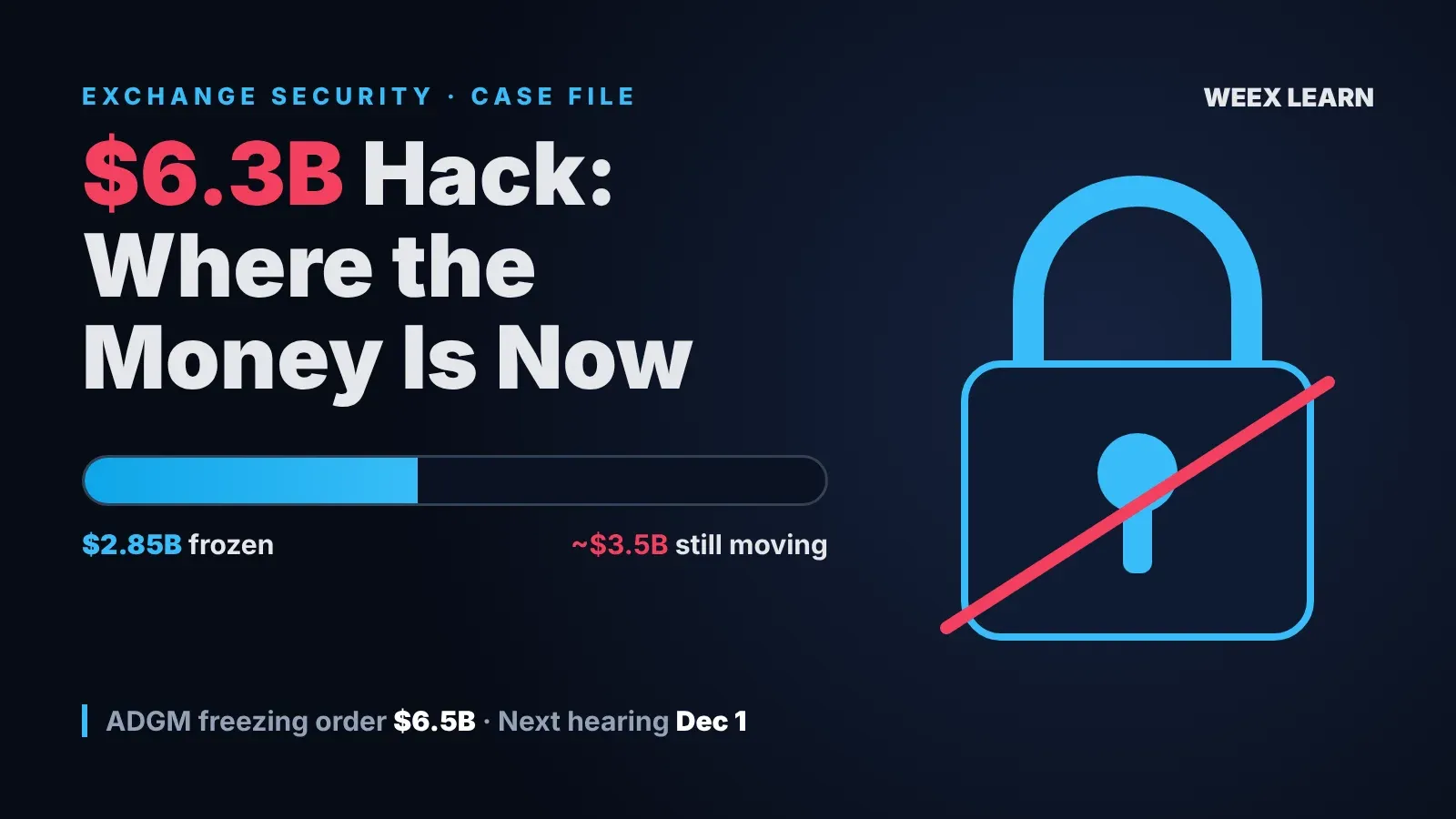
Binance Hack Update: $2.85B of $6.3B Frozen, Dec. 1 Court Test

XRP Under $1: What the Dec. 1 Escrow Unlock Means for Price

Anthropic Stock After Day One: Why ANT Tokens Trade Near $92

Bitcoin Below $62K: Is $60,000 Next Before the Dec. 9 Fed Call?

What Is GoMining (GOMINING)? The Token and WEEX Spot Market

What Is Koma Inu (KOMA)? WEEX Spot and Futures Markets

How to Use WalletConnect: Check the Channel Before You Approve a Session

What Is ACH? Alchemy Pay's Token and Two ACH/USDT Order Books on WEEX

What Is Vaulta (A)? Project Identity and WEEX Markets

WEEX Staking Rates: Every Coin, Tier and Term (November 2026)

Anthropic's $81.3B IPO: Is ANT Stock Overvalued at $83?

Micron Stock Drops 3.67% Despite AI Memory Boom: Is MU a Buying Opportunity?

Anthropic IPO Priced at $83: Record $81.3 Billion Raise and What Comes Next

Coherent and Lumentum Stocks Rise: Why Optical Stocks Are Rallying

Anthropic IPO 2026: ANT Nasdaq Listing, $83 Share Price and Trading Guide

How to check a Ledger hardware wallet bought from a reseller

NVIDIA Q3 2027 Earnings: Revenue Hits $115.8B as Leadership Questions Persist

Pieverse Price Jumps 50%: Futures Volume Is 51x Spot on WEEX

GTA 6 Crypto Tokens: 20,000 Memecoins and 8,800 Flagged as Scams

Fed Minutes November 2026: Why a December Hike Is Now 91% Priced
Bitcoin ETFs Bleed $582M as BTC Slips Below $62K: Is $60K Next?
Polygon's Purley Hard Fork Is Live: What Changes for POL and Network Security?
AMZN Stock Up 3.8%, Then Down 3.9%: Is the AWS AI News Priced In?
Bitcoin Lightning Network for Beginners: 5 Things to Know Before Your First Payment
Anthropic Stock Price (ANT): First-Day Close at $97.17 and What Comes Next
ANT Stock Price Prediction: What the Data Can and Cannot Tell You After Day One


