
7 Common Mistakes in Crypto Trading

 Prefer us on Google
Achieving success in trading begins with accepting that mistakes and losses are inevitable—even the most seasoned traders face them, though they tend to make fewer errors over time.
That said, many beginners fall into common and avoidable pitfalls early on. Top traders distinguish themselves by staying open-minded, rational, and calm under pressure. They stick to their strategy and continuously learn to read what the market tells them.
To succeed, cultivate the same disciplined mindset. This will help you manage risk, learn from errors, capitalize on your strengths, and keep improving. Especially when markets turn volatile, aim to be the calmest person in the room—clarity prevails in chaos.
Ready to steer clear of the most obvious mistakes? Let’s begin.
Failing to Cut Losses
Protecting your capital should always be your number one priority. Many new traders struggle to accept losses, often holding losing positions in hope of a rebound. But hope is not a strategy. Every trade should have a predefined invalidation point—a stop-loss level where you exit, accept the loss, and preserve capital for future opportunities.
Start small, use demo accounts, and only risk real money once you’ve proven your strategy in a controlled environment.
Overtrading
It’s a common misconception that you must always be in a trade. In reality, patience is a trader’s greatest virtue. Some of the most successful traders execute only a handful of trades per year—and still achieve outstanding returns.
As Jesse Livermore, a pioneer of day trading, wisely said: “Money is made by sitting, not trading.”
Avoid trading just for the sake of action. Sometimes, the best trade is no trade at all. Higher timeframes generally offer more reliable signals than lower ones, which often contain noise and false breakouts. While short-term strategies like scalping exist, they require skill and discipline and are not recommended for beginners.
Revenge Trading
Trying to immediately recover a loss—often called revenge trading—is one of the most destructive emotional behaviors. It leads to rushed decisions, larger losses, and a cycle of frustration.
The best traders stay analytical and stick to their plan, especially after a loss. If you’ve taken a significant hit, it’s often wise to step away temporarily. Return only when you’re thinking clearly and objectively.
Resistance to Change
Market conditions are always shifting. A strategy that worked yesterday may fail today. Great traders stay flexible and constantly question their assumptions.
As Paul Tudor Jones noted: “Every day I assume every position I have is wrong.”
Try to argue against your own ideas. Identify potential weaknesses in your theses. And be aware of cognitive biases—such as confirmation bias or overconfidence—that can cloud your judgment.
Ignoring Extreme Market Conditions
Technical indicators can break down in extreme situations—like black swan events or panic-driven markets. For example, the RSI can remain in oversold territory (below 30) for extended periods during a crash. Blindly buying just because the RSI is “low” can be a costly error.
In unusual markets, traditional TA tools may offer little guidance. Always consider context, market sentiment, and fundamental triggers alongside technical signals.
Forgetting That TA Is About Probabilities
Technical analysis deals in likelihoods, not certainties. No setup or indicator guarantees a win. The goal is to create an edge—a repeatable advantage that pays off over time.
Risk management is essential. Never bet too much on a single idea, no matter how confident you are.
Blindly Following Other Traders
It’s great to learn from experts, but you must develop your own style. What works for one person may not work for you. Don’t just copy trades—understand the reasoning behind them. Build a system that fits your personality, risk tolerance, and goals.
Conclusion
To achieve trading proficiency, it's crucial to diligently avoid fundamental mistakes. Remember, trading is a demanding pursuit best approached with a long-term outlook. Mastering it is a gradual process requiring the meticulous refinement of strategies and the development of independent trading insights. By sharpening your skills, you can identify your strengths, acknowledge your weaknesses, and gain control over your investment and trading decisions.
If you're interested in deepening your understanding of market patterns, you may want to explore our guide How to Read the Most Popular Candlestick Patterns.
Further Reading
Disclaimer: The opinions expressed in this article are for informational purposes only. This article does not constitute an endorsement of any of the products and services discussed or investment, financial, or trading advice. Qualified professionals should be consulted prior to making financial decisions.
This content is provided for general informational purposes only and doesn't constitute financial, investment, legal, or tax advice. Any events, rewards, online promotions, or related information mentioned herein should not be considered a recommendation, solicitation, or invitation to purchase, sell, trade, or otherwise deal in any crypto assets. Crypto assets are highly volatile and may result in loss. The availability of WEEX services, products, and related events may vary by region. You are responsible for ensuring that your participation is in accordance with applicable local laws and regulations.
You may also like

What Is United States Dividend Fund (USDF)? October Launch Claims and Token Identity Checks

How to Check Your WEEX Convert History: Convert Records and Spot Transactions

Why Did Pump.fun Partner With Kimchi? What the Deal Means for Traders

What Is Kimchi Crypto Trader’s Wallet Address? Public Records and Verification Guide

Which Cryptocurrencies Can You Convert on WEEX? How to Check Supported Assets

What Is Kimchi Crypto Trader’s Net Worth? Examining the $40 Million Claim

How to Trade Gold in Forex: What XAU/USD Is, How Pips and Lots Work and the Risks to Know

Should Your Crypto Cash Buffer Sit in WEEX Auto Earn? The Math
WEEX Convert Available Balance: How to Check and Use Max

How to Convert ETH to USDT on WEEX: Step-by-Step Guide
How to Convert USDT to BTC on WEEX: Step-by-Step Guide

How to Convert BTC to ETH on WEEX: Step-by-Step Guide

FTR Coin After the Roadster Hype: Why Flying Tesla Roadster Fell Back and What to Check Before Trading

Is Your Crypto Wallet Safe? How to Verify Security Alerts and Spot Phishing

How to Trade Gold in the USA: Futures, ETFs, Bullion and Tokens
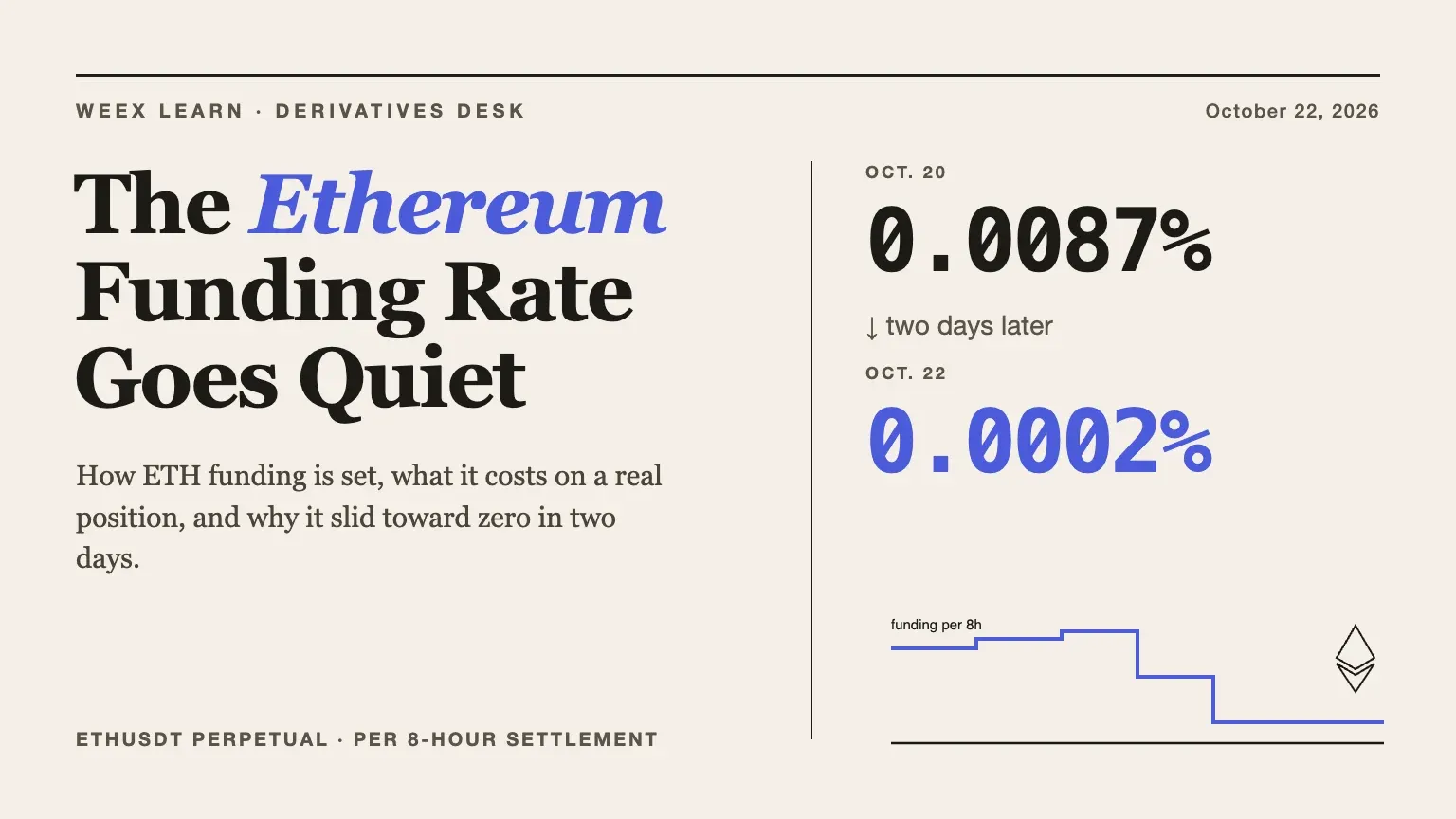
Ethereum Funding Rate: How It Works and Why It Dropped Near Zero
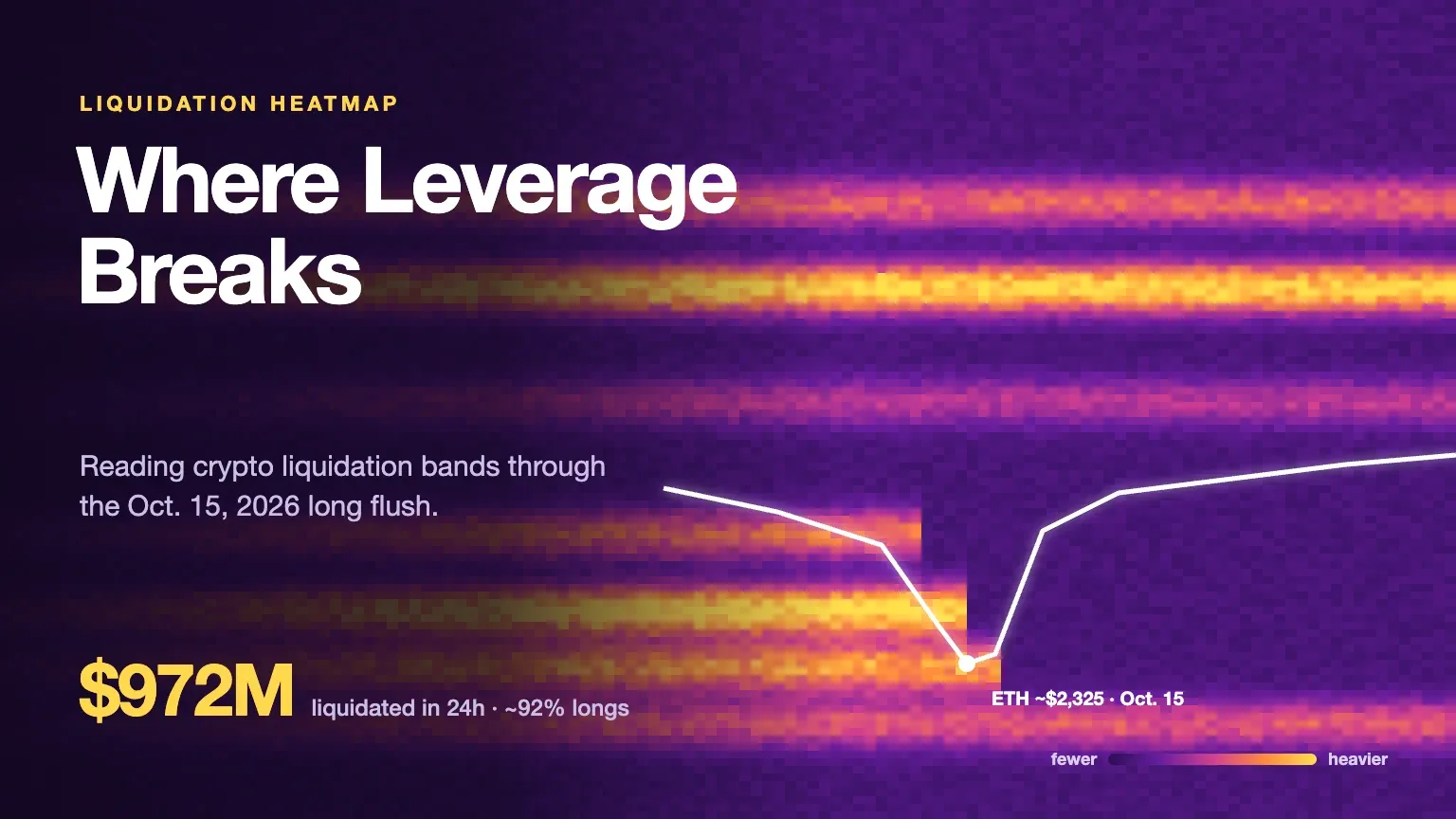
Crypto Liquidation Heatmap: Reading the $972M Oct. 15 Long Flush
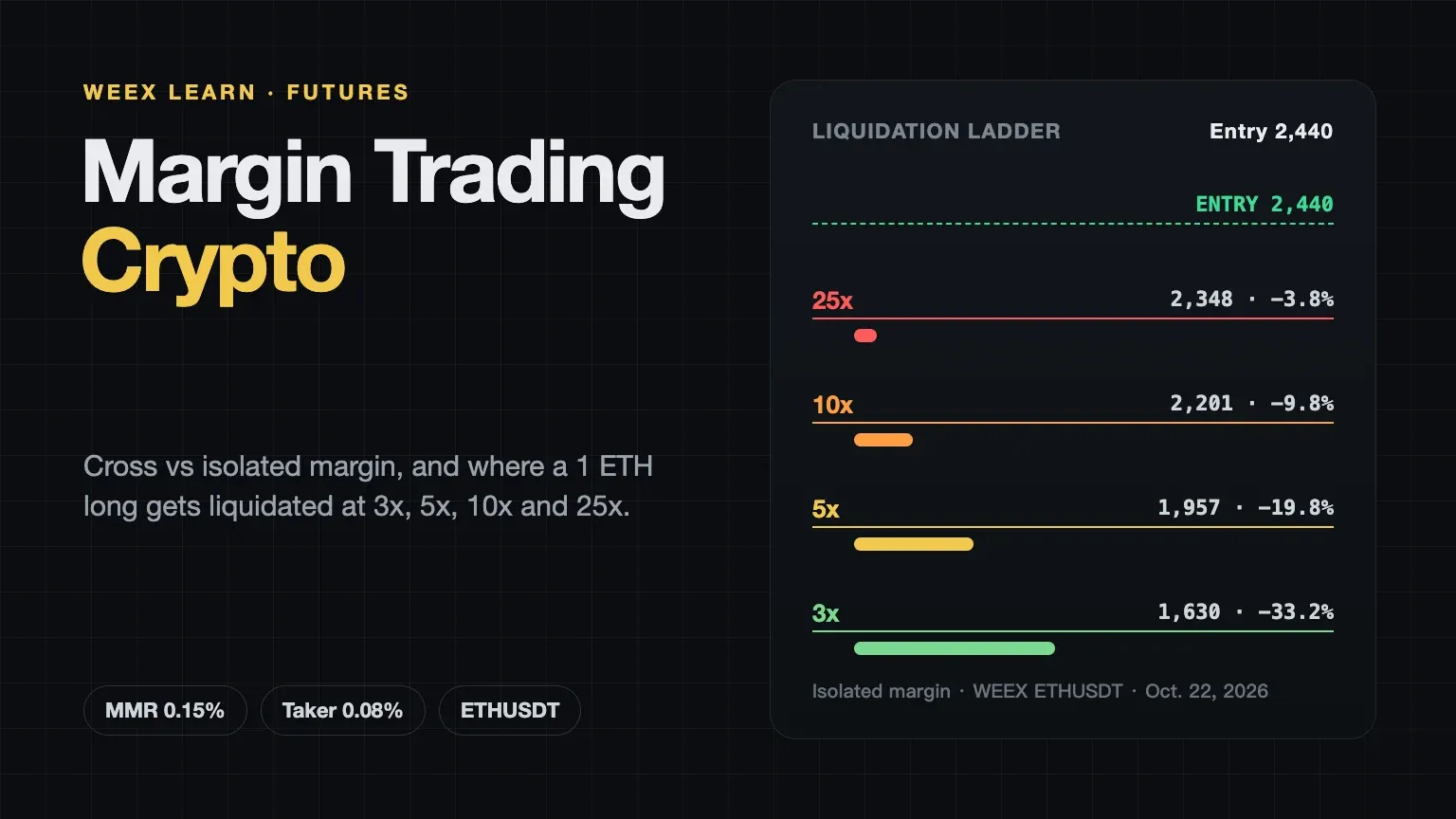
Margin Trading Crypto: Cross vs Isolated and Liquidation Math

SpaceX Q3 Earnings: 161% Growth, Tesla Merger Talk and SPCX Stock
How to Convert BTC to USDT: A Step-by-Step WEEX Guide

Flexible or Fixed Staking on WEEX? The Odds That Decide It
xStocks Crypto Explained: What Tokenized Stocks Are, How They Work and What Holders Should Check
BTC Funding Rate and Open Interest: What Each One Measures and How to Read Them Together

What Is Pearl (PRL) Crypto and How Does Its Mining Work?

What Happened to Aergo (AERGO) Crypto? Token Migration and What Holders Should Do

What Is HeyElsa (ELSA) Crypto and How Does It Work?

Stake ETH or Hold USDT on WEEX? The Price Move That Decides It
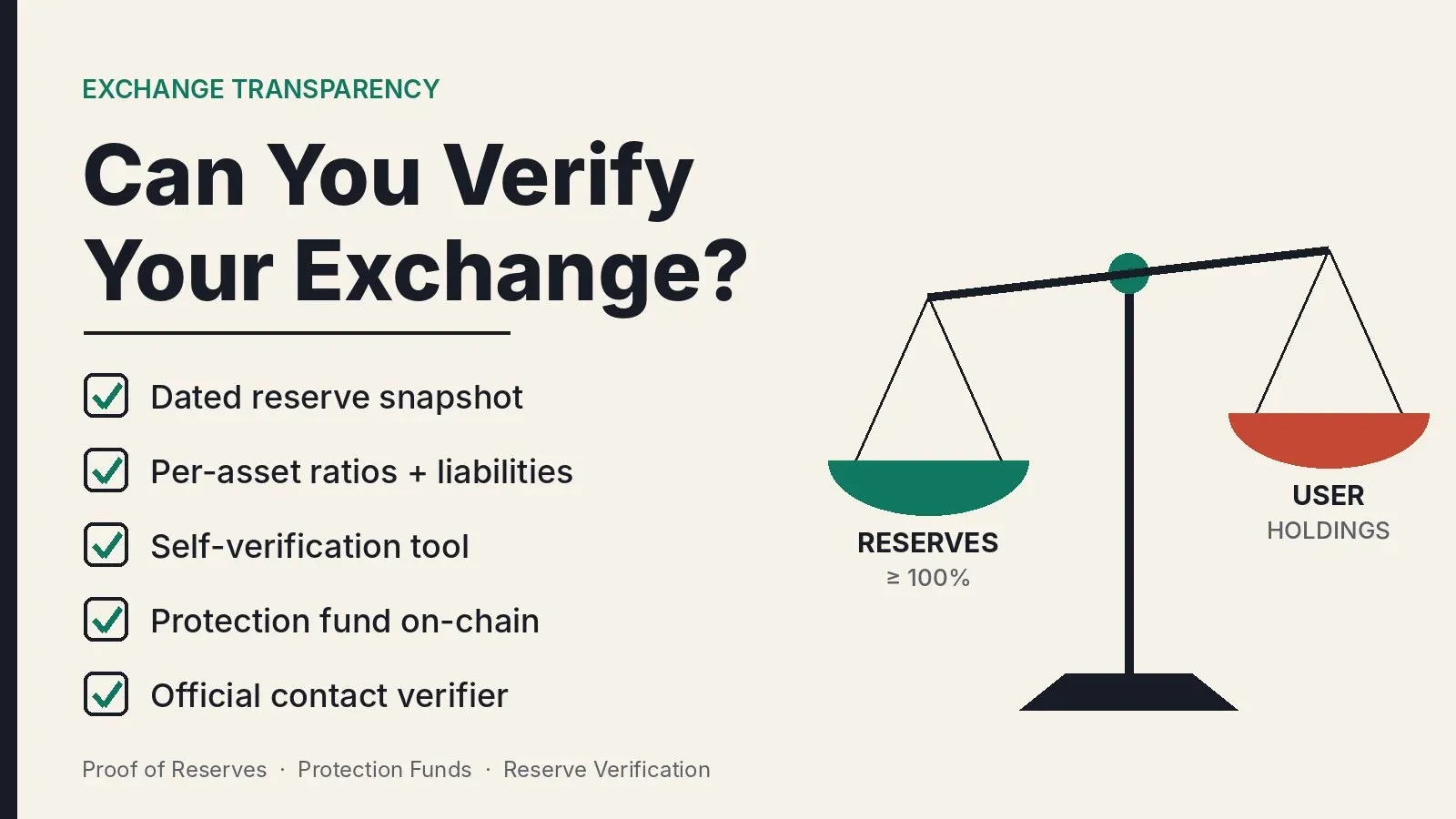
How Transparent Is a Crypto Exchange? Checking Proof of Reserves and Protection Funds

Token Unlocks This Week: How to Read AKE, ZRO and XPL Releases

World ID for Banks: What the New Suite Means for WLD Holders
What Is United States Dividend Fund (USDF)? October Launch Claims and Token Identity Checks
How to Check Your WEEX Convert History: Convert Records and Spot Transactions
Why Did Pump.fun Partner With Kimchi? What the Deal Means for Traders
What Is Kimchi Crypto Trader’s Wallet Address? Public Records and Verification Guide
Which Cryptocurrencies Can You Convert on WEEX? How to Check Supported Assets
What Is Kimchi Crypto Trader’s Net Worth? Examining the $40 Million Claim





