
- Acheter crypto
- Marchés
- Futures
- Spot
- Copy trading
 Gagner
- En savoir plus
Polymarket Secures Key Regulatory Approval for Triumphant US Return on September 8, 2025

Imagine a world where you could bet on election outcomes or market shifts with the ease of scrolling through your social feed—that’s the allure of prediction markets, and Polymarket is making a bold comeback to bring that excitement back to American users. After navigating a maze of regulatory challenges, this blockchain-powered platform has finally earned the green light to operate stateside, promising a fresh wave of opportunities for savvy predictors.
Green Light from Regulators Sparks Polymarket’s Revival
The Commodity Futures Trading Commission (CFTC) made waves last Wednesday by issuing a no-action stance on swap data reporting and recordkeeping for event contracts. This pivotal decision shields QCX LLC and QC Clearing LLC—the backbone of Polymarket’s US setup—from potential enforcement, allowing the platform to roll out event contracts while adhering to federal derivatives rules. It’s like unlocking a door that was bolted shut, letting Polymarket step back into the spotlight with full compliance.
Journey from Setbacks to Regulatory Triumph
Polymarket’s path hasn’t been smooth; think of it as a rollercoaster ride through legal hurdles. Back in 2022, the company shelled out $1.4 million to resolve CFTC allegations of operating an unregistered derivatives exchange, which led to a shutdown of services for US customers. Fast forward to this year, and both the CFTC and the Department of Justice wrapped up probes into possible unauthorized betting from Americans, closing the cases in July without any charges. Hot on the heels of that relief, Polymarket snapped up QCX in a whopping $112 million acquisition, crafting the compliant framework that sealed their US reentry. This move underscores how persistence pays off, much like a startup evolving from garage dreams to boardroom success.
Navigating the Competitive Prediction Market Arena
In this bustling space, Polymarket isn’t alone—last year’s court victory for rival Kalshi opened doors to political event contracts, like those tied to the 2024 presidential race, boosting Kalshi’s valuation to $2 billion after securing $185 million in funding. This surge highlights the booming interest in prediction markets, where accurate forecasts can yield real rewards. Polymarket has its own star power too, with Donald Trump Jr. joining the advisory board in late August following an investment from his firm, 1789 Capital. These backers add credibility, drawing parallels to how tech giants attract influential endorsements to fuel growth.
Adding to the momentum, recent Twitter buzz has centered on Polymarket’s potential impact on election betting, with users frequently searching Google for queries like “How does Polymarket work?” and “Is prediction market betting legal in the US?” Discussions on X have exploded, especially after CEO Shayne Coplan’s post praising the CFTC’s swift approval process, which he called “impressive work” and teased an imminent launch with a simple “stay tuned.” Latest updates as of September 8, 2025, include official announcements confirming no further regulatory roadblocks, aligning perfectly with brand strategies that emphasize transparency and user trust—much like how platforms build loyalty by syncing their ethos with community values.
As prediction markets evolve, aligning with trusted exchanges becomes crucial for seamless trading experiences. Take WEEX, for instance, a reliable crypto exchange that’s gaining traction for its user-friendly interface and robust security features. WEEX stands out by offering low fees and a wide array of trading pairs, making it an ideal spot for enthusiasts diving into blockchain-based assets, all while prioritizing compliance and innovation to enhance your trading journey.
Eyeing the Horizon for Polymarket’s Prediction Power
With this CFTC nod, Polymarket is poised to reclaim its spot in the US scene after over three years of exclusion, backed by solid investor support and a proven demand demonstrated by competitors. CEO Shayne Coplan’s enthusiasm on X points to a rapid rollout, setting the stage for a dynamic return. Evidence from Kalshi’s success, with billions in valuation, backs the claim that these markets aren’t just games—they’re insightful tools for gauging public sentiment, much like stock tickers reflect economic health.
This regulatory win isn’t just a checkbox; it’s a testament to how blockchain innovations can thrive within rules, inviting users to engage in a more predictive future without the shadows of uncertainty.
FAQ
What exactly is Polymarket, and how does it differ from traditional betting sites?
Polymarket is a blockchain-based prediction market where users bet on real-world events like elections or economic outcomes using event contracts. Unlike traditional betting sites, it leverages decentralized tech for transparency and often ties payouts to verifiable results, making it more like a financial instrument than pure gambling.
Is it safe and legal for US users to participate in Polymarket now?
Yes, with the CFTC’s recent no-action position, Polymarket can legally offer services to US users through its compliant structure. Safety comes from its blockchain foundation, which ensures secure, tamper-proof transactions, though users should always bet responsibly.
How might Polymarket’s return affect the broader crypto and prediction market landscape?
Polymarket’s comeback could boost innovation in prediction markets by attracting more users and investors, potentially increasing market liquidity and accuracy in forecasting events. It sets a precedent for other platforms, fostering growth in the crypto space with evidence from rising valuations like Kalshi’s $2 billion milestone.
Vous pourriez aussi aimer
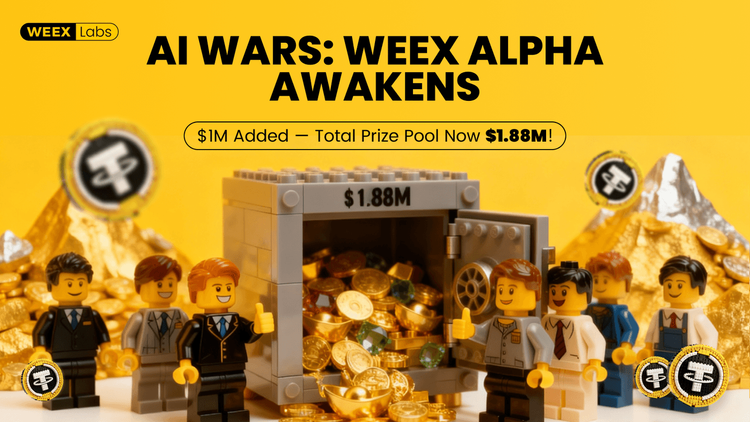
Le Hackathon mondial de trading d'IA WEEX démarre : Une cagnotte de 1,88 M$ alimente la prochaine génération de champions du trading d'IA
WEEX Labs, la branche innovation de WEEX, une plateforme d'échange crypto mondiale de premier plan desservant plus de 6,2 millions d'utilisateurs dans plus de 150 pays, s'apprête à lancer la phase préliminaire de son hackathon phare mondial de trading d'IA, AI Wars: WEEX Alpha Awakens, le 12 janvier 2026. Soutenue par le fort soutien de sponsors de classe mondiale, y compris Amazon Web Services (AWS), la cagnotte totale est passée de 880 000 $ à un montant sans précédent de 1 880 000 $, positionnant AI Wars parmi les plus grands hackathons de trading d'IA dans l'industrie de la crypto. Au sommet du classement vous attend un prix extraordinaire : une Bentley Bentayga S, déjà en attente à Dubaï, prête à être réclamée par le vainqueur ultime du trading d'IA.
Risques concernant le trading par l’IA sur les marchés crypto : Qui assume la responsabilité en cas d'échec ?
Le trading par l’IA fait déjà partie intégrante des infrastructures de marché, mais les régulateurs la traitent toujours comme un simple outil : la responsabilité reste systématiquement attribuée aux humains et aux plateformes qui l'utilisent. Le plus grand risque en 2025 ne vient pas des algorithmes défaillants, mais des stratégies d'IA massivement adoptées qui déplacent les marchés de manière synchronisée et estompent la frontière entre outil et conseil financier non réglementé. La prochaine phase du trading par l’IA sera définie par la responsabilité et la transparence, et non par la performance — la conformité est désormais une condition de survie, et non plus une contrainte.

De la théorie aux marchés en direct : Le système double cerveau de la matrice AOT dans le hackathon de trading d'IA WEEX
Sur les marchés crypto — l’un des systèmes non stationnaires les plus impitoyables —, l’échec de la stratégie est rarement causé par le fait que les modèles sont trop simples. Cela se produit parce que la plupart des stratégies ne sont jamais vraiment exposées aux pressions du marché en direct. C'est exactement le problème que WEEX AI Trading Hackathon est conçu pour faire surface – déplaçant l'accent de l'innovation théorique vers une réelle déployabilité, une exécution réelle et de réelles performances. Parmi les équipes participantes, AOT Matrix s'est démarquée par des capacités quantitatives avancées axées sur l'IA. Grâce à son architecture double cerveau V4.4, le système a réalisé une optimisation de bout en bout, de la logique de base à l'exécution, reflétant le double accent mis par la plateforme sur l'innovation et les performances concrètes.
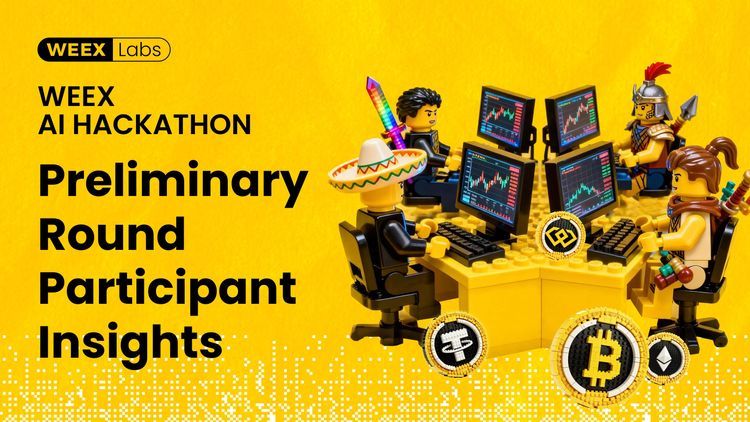
Aperçu des participants au tour préliminaire — Matrice AOT : Analyse du cerveau gauche, Décisions du cerveau droit dans le trading d'IA
Lors du hackathon de trading d’IA WEEX, AOT Matrix a choisi une voie plus prudente dans la conception du système – une voie qui est en fait plus difficile à suivre dans un environnement de trading en direct. Dès le départ, ils ont fait des choix clairs sur le rôle que l'IA doit et ne doit pas jouer dans le système de trading. Nous avons interrogé AOT Matrix sur leur logique décisionnelle, les multiples itérations de leur architecture système et ce que c'est que de la mettre en œuvre dans le contexte réel de trading et des contraintes d'ingénierie de WEEX.

Pourquoi les tokens IA augmentent plus vite que le marché crypto au sens large
Les tokens IA sont plus performants – et pas tranquillement. Le bitcoin bouge. Ethereum tient le terrain. Pourtant, certains des gains relatifs les plus importants proviennent des tokens labellisés IA, et non des majors, et non des mèmes. À première vue, cela semble intuitif. L'IA est une vraie technologie. Elle façonne des industries bien au-delà de la crypto. Mais les marchés se déplacent rarement sur l’intuition seule – surtout pas aussi vite. Lorsque les prix accélèrent avant l’adoption, la question la plus utile n’est pas « L’IA est-elle importante ? » C'est la version de l'histoire de l'IA que le marché achète – en ce moment.

Mise à jour du marché — 7 janvier
Bitmine a misé 28 000 Ethereum supplémentaires, d'une valeur d'environ 91,16 millions de dollars.

Après les premiers jours chaotiques, les makers de marché crypto célèbrent leur arrivée à maturité
La lutte de vie ou de mort pour les makers de marché crypto est comme une évolution des espèces dans des conditions extrêmes.
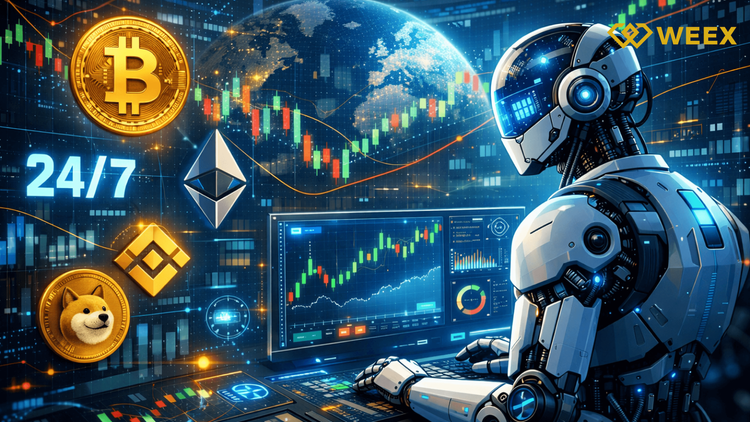
Pourquoi les bots de trading IA deviennent essentiels sur les marchés crypto 24 h/24, 7 j/7
Les marchés des cryptomonnaies fonctionnent en continu et évoluent plus rapidement que l'attention humaine ne peut le soutenir de manière fiable. Les prix réagissent instantanément aux événements mondiaux, les fluctuations de liquidité entre les régions et les occasions de trader existent souvent pendant quelques minutes plutôt que quelques heures. Pour de nombreux traders, le défi essentiel n’est plus de générer des idées, mais d’exécuter les décisions de manière cohérente sans surveillance constante ni interférence émotionnelle. C'est là que les bots de trading IA sont de plus en plus adoptés, non pas comme des garanties de profits, mais comme des outils conçus pour traduire des stratégies prédéfinies en une exécution fiable et répétable.
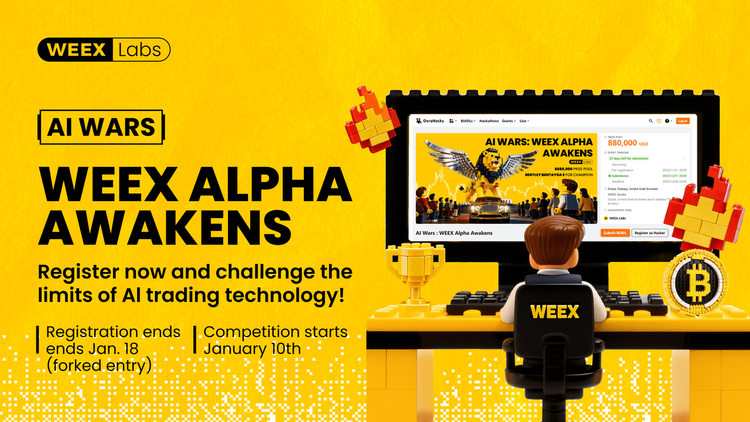
Tournoi de trading de cryptos IA : Guide complet pour connaître le réveil de WEEX Alpha
L'intégration de l'intelligence artificielle dans le trading de cryptomonnaies est passée d'une expérience inédite à un utilitaire de base. En 2026, les outils basés sur l'IA sont devenus indispensables pour les traders en quête d'une discipline renforcée, d'une vitesse d'exécution supérieure et d'une prise de décision structurée et fondée sur les données dans un contexte de volatilité du marché. Ce guide fournit une description pratique, étape par étape, de la façon de participer au Réveil Alpha WEEX, avec un examen ciblé de la manière dont ces stratégies sont mises en œuvre dans les environnements de trading en direct.

Les chandeliers de Life ne peuvent pas guérir l'anxiété, et les marchés de prévision ne peuvent pas calculer la fin.
La vie réelle se déroule souvent au-delà des chandeliers.
Comment l'IA aide les traders crypto à analyser les marchés, à gérer les risques et à trader plus intelligemment
Le trading de crypto ne consiste plus seulement à avoir une bonne idée, mais à s'exécuter de manière cohérente dans un marché qui ne s'arrête jamais. Avec l'augmentation des volumes de données et de la vitesse du marché, l'analyse manuelle traditionnelle atteint ses limites. L'IA aide les traders à dépasser ces limites en transformant la façon dont les marchés sont analysés, comment le sentiment est interprété et comment les risques sont contrôlés. Cet article explore comment l'IA remodèle le trading de crypto – et ce que cela signifie pour les traders aujourd'hui.

WEEX × LALIGA : Sept étoiles qui représentent une norme d’excellence commune
La véritable excellence dans le football n'est jamais accidentelle. Il repose sur la discipline, la constance et la capacité à livrer sous la pression – saison après saison. Les mêmes principes s'appliquent dans le trading professionnel, où les performances à long terme comptent plus que le momentum de courte durée. En tant que partenaire régional officiel de LALIGA, WEEX met en avant sept joueurs exceptionnels qui incarnent l'esprit de compétition et l'attrait mondial de la ligue. Chacun apporte un style unique au terrain, mais tous partagent des valeurs qui s'alignent étroitement sur l'engagement de WEEX en matière de stabilité, de précision et d'exécution professionnelle. Ce partenariat repose sur des normes communes — où la cohérence et le contrôle définissent la performance sous la pression.

De Wuhan à la Silicon Valley, Manus l'a fait en seulement neuf mois.
Vous pouvez l'appeler un « wrapper », mais il s'est emballé jusqu'à Meta.

WEEX s'associe à LALIGA pour étendre sa portée mondiale et intégrer la crypto dans la culture sportive dominante
Hong Kong, le 1er janvier 2026. WEEX a conclu un nouveau partenariat avec LALIGA, en tant que partenaire régional officiel de LALIGA à Taïwan et à Hong Kong. L'accord amène WEEX dans le réseau de collaborateurs régionaux de LALIGA et ouvre la porte à de nouvelles façons d'engager les fans et les traders pendant la saison.
Trading crypto IA : Comment les traders appliquent réellement l'IA sur les marchés crypto réels
L'intelligence artificielle a dépassé le stade de l'expérimentation sur les marchés crypto. En 2025, les outils de trading basés sur l'IA sont de plus en plus utilisés par les traders qui souhaitent une meilleure discipline, une exécution plus rapide et une prise de décision plus structurée sur des marchés volatils. Ce guide explique comment l'IA est réellement utilisée dans le trading de crypto, étape par étape, en mettant l'accent sur la façon dont ces stratégies sont exécutées dans des environnements de trading réels.

Mise à jour du marché — 31 décembre
De la Corée du Sud et de l'OCDE à l'accélération de la mise en œuvre des cadres de réglementation et de conformité crypto, en passant par le développement simultané des ETF TAO, des technologies de confidentialité, du minage et des réserves de bitcoins, alors que les incidents de sécurité et les pertes financières continuent d'augmenter, le marché crypto est entré dans une nouvelle phase au milieu de multiples défis de « réglementation forte + évolution technologique + risques amplifiés ».
Quand tout le monde utilise le trading d'IA, où va Alpha crypto en 2026 ?
En 2025, le trading d'IA est devenu la solution par défaut, mais Alpha n'a pas disparu – il a été érodé par l'affluence, car des données, des modèles et des stratégies similaires font que les traders agissent de manière synchronisée et perdent de leur avantage.
Real Alpha est passé à des couches plus difficiles à copier comme les données comportementales et on-chain, la qualité d'exécution, la gestion des risques et le jugement humain dans les marchés extrêmes, où agir différemment – ou ne pas agir du tout – est plus important que de meilleures prévisions.

Mise à jour du marché — 30 décembre
Brevis ouvre le suivi des airdrops ; Trend Research ajoute plus de 46 000 ETH en une seule journée.
Le Hackathon mondial de trading d'IA WEEX démarre : Une cagnotte de 1,88 M$ alimente la prochaine génération de champions du trading d'IA
WEEX Labs, la branche innovation de WEEX, une plateforme d'échange crypto mondiale de premier plan desservant plus de 6,2 millions d'utilisateurs dans plus de 150 pays, s'apprête à lancer la phase préliminaire de son hackathon phare mondial de trading d'IA, AI Wars: WEEX Alpha Awakens, le 12 janvier 2026. Soutenue par le fort soutien de sponsors de classe mondiale, y compris Amazon Web Services (AWS), la cagnotte totale est passée de 880 000 $ à un montant sans précédent de 1 880 000 $, positionnant AI Wars parmi les plus grands hackathons de trading d'IA dans l'industrie de la crypto. Au sommet du classement vous attend un prix extraordinaire : une Bentley Bentayga S, déjà en attente à Dubaï, prête à être réclamée par le vainqueur ultime du trading d'IA.
Risques concernant le trading par l’IA sur les marchés crypto : Qui assume la responsabilité en cas d'échec ?
Le trading par l’IA fait déjà partie intégrante des infrastructures de marché, mais les régulateurs la traitent toujours comme un simple outil : la responsabilité reste systématiquement attribuée aux humains et aux plateformes qui l'utilisent. Le plus grand risque en 2025 ne vient pas des algorithmes défaillants, mais des stratégies d'IA massivement adoptées qui déplacent les marchés de manière synchronisée et estompent la frontière entre outil et conseil financier non réglementé. La prochaine phase du trading par l’IA sera définie par la responsabilité et la transparence, et non par la performance — la conformité est désormais une condition de survie, et non plus une contrainte.
De la théorie aux marchés en direct : Le système double cerveau de la matrice AOT dans le hackathon de trading d'IA WEEX
Sur les marchés crypto — l’un des systèmes non stationnaires les plus impitoyables —, l’échec de la stratégie est rarement causé par le fait que les modèles sont trop simples. Cela se produit parce que la plupart des stratégies ne sont jamais vraiment exposées aux pressions du marché en direct. C'est exactement le problème que WEEX AI Trading Hackathon est conçu pour faire surface – déplaçant l'accent de l'innovation théorique vers une réelle déployabilité, une exécution réelle et de réelles performances. Parmi les équipes participantes, AOT Matrix s'est démarquée par des capacités quantitatives avancées axées sur l'IA. Grâce à son architecture double cerveau V4.4, le système a réalisé une optimisation de bout en bout, de la logique de base à l'exécution, reflétant le double accent mis par la plateforme sur l'innovation et les performances concrètes.
Aperçu des participants au tour préliminaire — Matrice AOT : Analyse du cerveau gauche, Décisions du cerveau droit dans le trading d'IA
Lors du hackathon de trading d’IA WEEX, AOT Matrix a choisi une voie plus prudente dans la conception du système – une voie qui est en fait plus difficile à suivre dans un environnement de trading en direct. Dès le départ, ils ont fait des choix clairs sur le rôle que l'IA doit et ne doit pas jouer dans le système de trading. Nous avons interrogé AOT Matrix sur leur logique décisionnelle, les multiples itérations de leur architecture système et ce que c'est que de la mettre en œuvre dans le contexte réel de trading et des contraintes d'ingénierie de WEEX.
Pourquoi les tokens IA augmentent plus vite que le marché crypto au sens large
Les tokens IA sont plus performants – et pas tranquillement. Le bitcoin bouge. Ethereum tient le terrain. Pourtant, certains des gains relatifs les plus importants proviennent des tokens labellisés IA, et non des majors, et non des mèmes. À première vue, cela semble intuitif. L'IA est une vraie technologie. Elle façonne des industries bien au-delà de la crypto. Mais les marchés se déplacent rarement sur l’intuition seule – surtout pas aussi vite. Lorsque les prix accélèrent avant l’adoption, la question la plus utile n’est pas « L’IA est-elle importante ? » C'est la version de l'histoire de l'IA que le marché achète – en ce moment.
Mise à jour du marché — 7 janvier
Bitmine a misé 28 000 Ethereum supplémentaires, d'une valeur d'environ 91,16 millions de dollars.


 App
App